Banking cybersecurity has come under the spotlight due to the SBI Data Leak. The State Bank of India found 3,897 customer records with personal details in a larger dataset circulating on the dark web. The bank went public on October 21, 2026, and said it is already investigating.
SBI told customers their account balances are safe. Still, the case shows why dark web monitoring matters and why banks must quickly investigate sensitive customer information.
What Happened in the SBI Data Leak 2026?
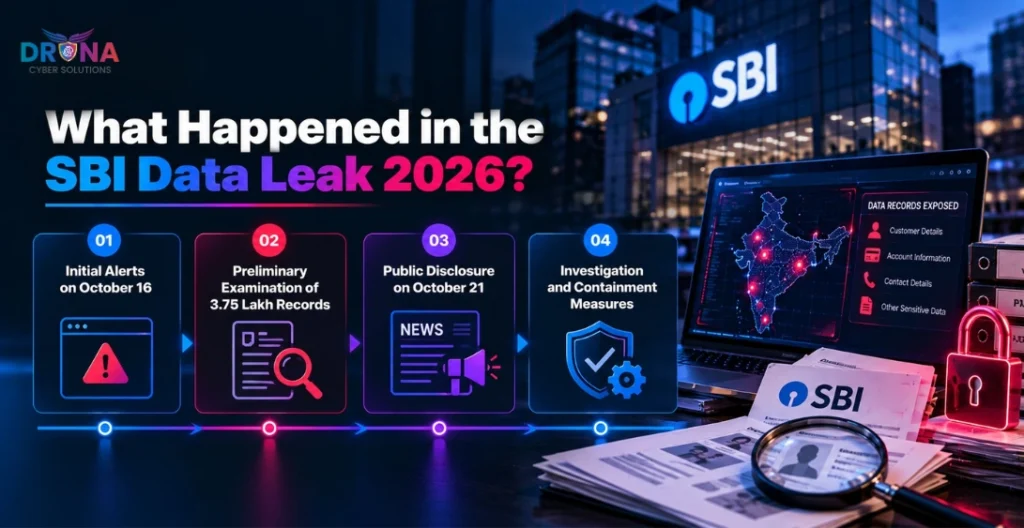
The bank discovered the SBI data leak after receiving warnings about a potential customer data leak. The bank’s disclosure provided a timeline, but the cause is still unknown.
Initial Alerts on October 16
On October 16, 2026, SBI received communications from its threat intelligence provider, the Defense Cyber Agency, and the Indian Computer Emergency Response Team (CERT-In). These alerts concerned customer information allegedly circulating on the dark web
Preliminary Examination of 3.75 Lakh Records
The bank reviewed about 375,000 records. It found that 3,897 of them held personally identifiable information. Importantly, the larger dataset does not represent 375,000 confirmed affected customers
Public Disclosure on October 21
On October 21, 2026, SBI shared news of the suspected data exposure in a stock exchange filing. The filing admitted the incident but said more investigation was needed to confirm whether the data is real and complete, where it came from, and how far it goes.
Investigation and Containment Measures
SBI switched on its cyber incident response and containment protocols. It also hired an independent cybersecurity agency, impanelled with CERT-In, to investigate. The bank said it is implementing corrective and preventive measures.
What Customer Information Was Exposed?
The SBI Data Leak reportedly covered several types of personally identifiable information. This includes customer identification details and loan-related records.
Reported information included:
- Names, gender, and dates of birth
- Registered mobile numbers and email addresses
- Home addresses
- Branch details and Customer Information File (CIF) identifiers
- Lead IDs and loan-related metadata
Criminals can use this data to impersonate someone else or run targeted fraud. That said, the disclosure did not confirm any leak of customer passwords, OTPs, or account balances.
Exposed personal data and unauthorized money transfers are two different things. Keep them separate when you judge this incident.
How Did SBI Customer Data Reach the Dark Web?
As of October 22, 2026, investigators were still working to determine the exact cause of the SBI Data Leak.
According to reports, a threat actor claimed access to SBI records and PDF documents. No one has independently verified the claims.
Dark web leaks typically begin in one of a few ways. The most common are stolen credentials, weak applications, unsafe data storage, and gaps in third-party access.
We cannot call any of these the confirmed cause here.
A proper data breach investigation must determine where the records came from. It must also identify unauthorized access and determine whether the data is from current or older datasets.
How Are Cybersecurity Investigators Examining the Incident?
The SBI Data Leak investigation aims to uncover what happened and the risks to customers. Forensic investigations typically involve a few major steps, but SBI hasn’t disclosed its full process.
Verifying Exposed Records
Investigators verify that information is accurate, current, not duplicated, and not unrelated to the bank. This prevents unverifiable dark web claims from becoming reality.
Identifying the Possible Source
Investigators can trace access logs, system activity, data repositories, and third-party connections. Digital forensics services can reconstruct what occurred and help preserve the evidence. That evidence points to the way an attacker might have infiltrated.
Assessing Customer Risks
The team looks at whether the exposed data could fuel phishing, identity impersonation, or other misuse. Cyber threat intelligence services can spot related threats and track new criminal activity.
Containing and Monitoring Threats
When investigators find real weak spots, the team can fix them and contain the damage. Incident response services help coordinate the action. Managed SOC services can also improve day-to-day threat detection and investigation.
Are SBI Customer Accounts and Balances Safe?
SBI said the incident did not materially hurt its core banking operations, financial performance, or business continuity.
The bank also told customers their balances are completely safe.
However, the SBI data leak raises concerns beyond account access. Personal details can be used to create a fake call or message that looks genuine.
Consider a caller who knows your name, phone number, or loan information. That person can sound sincere without altering your bank account.
These are risks that could happen in banking data breaches. They are not proven fraud incidents related to this incident.
What Should SBI Customers Do After the Data Leak?
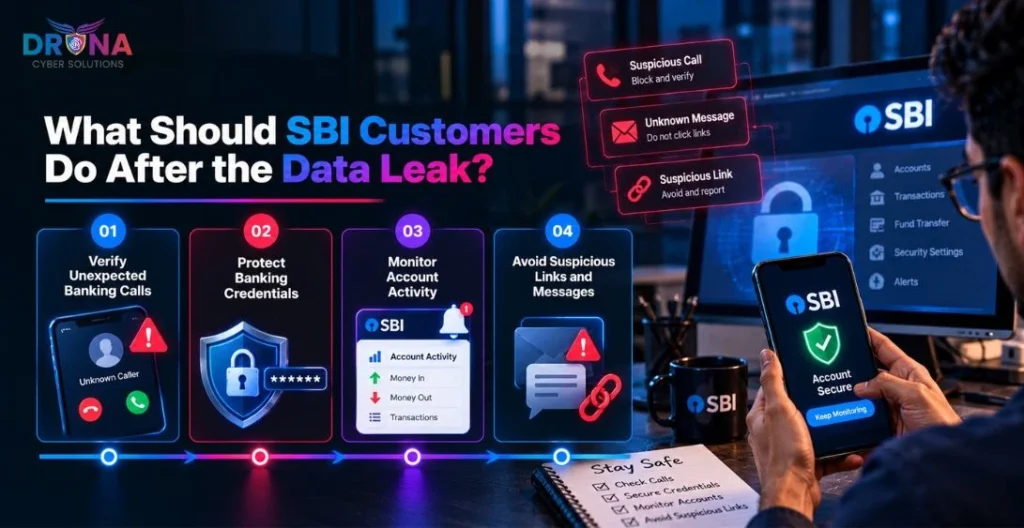
Stay alert, but do not assume your account has been hacked. These steps can lower your risk of common banking scams.
Verify Unexpected Banking Calls
A caller who knows your details is not automatically genuine. If you receive an unusual request, contact SBI through its official customer service.
Protect Banking Credentials
Never share your OTPs, UPI PINs, passwords, or card security details. Real banking help never asks you for these.
Monitor Account Activity
Check your transactions and alerts often. If anything looks unfamiliar, notify your bank promptly through official channels.
Avoid Suspicious Links and Messages
Be wary of messages claiming your account must be verified or that it risks being blocked. Open your banking app or website directly instead of tapping unknown links.
These tips apply to banking phishing scams in general. They do not mean every suspicious message is linked to the SBI incident.
What Can Indian Businesses Learn From the SBI Data Leak?
The SBI Data Leak shows why companies need to know where their customer data sits and how they would spot an exposure.
All businesses need to review who has access to what, how it is shared with third parties, how long it is stored, and how it’s recorded.
Cybersecurity compliance audits regularly identify weak controls. Cybersecurity services can back this up with technical security assessments.
Companies also need clear steps for saving evidence and escalating issues. Finding data on the dark web does not tell you how it got out.
For more prevention tips, businesses can read Cybersecurity Awareness Month 2026 to explore what to Fix Before Your Next Compliance Review.
Conclusion
The SBI data leak shows that even suspected customer data exposure can raise security concerns while banking operations continue as usual. For companies that handle sensitive records, slow detection and incomplete investigations make it hard to assess an incident’s scope and respond effectively.
Drona Cyber Solutions can identify and evaluate potential customer data breaches. Our Dark Web Monitoring Services, Digital Forensics Services, and incident response capabilities help identify threats, preserve evidence, conduct technical investigations, and coordinate security action.
Don’t wait until sensitive business or customer information surfaces publicly. Contact Drona Cyber Solutions to assess potential exposure, investigate suspicious activity, and strengthen your organization’s cybersecurity readiness.