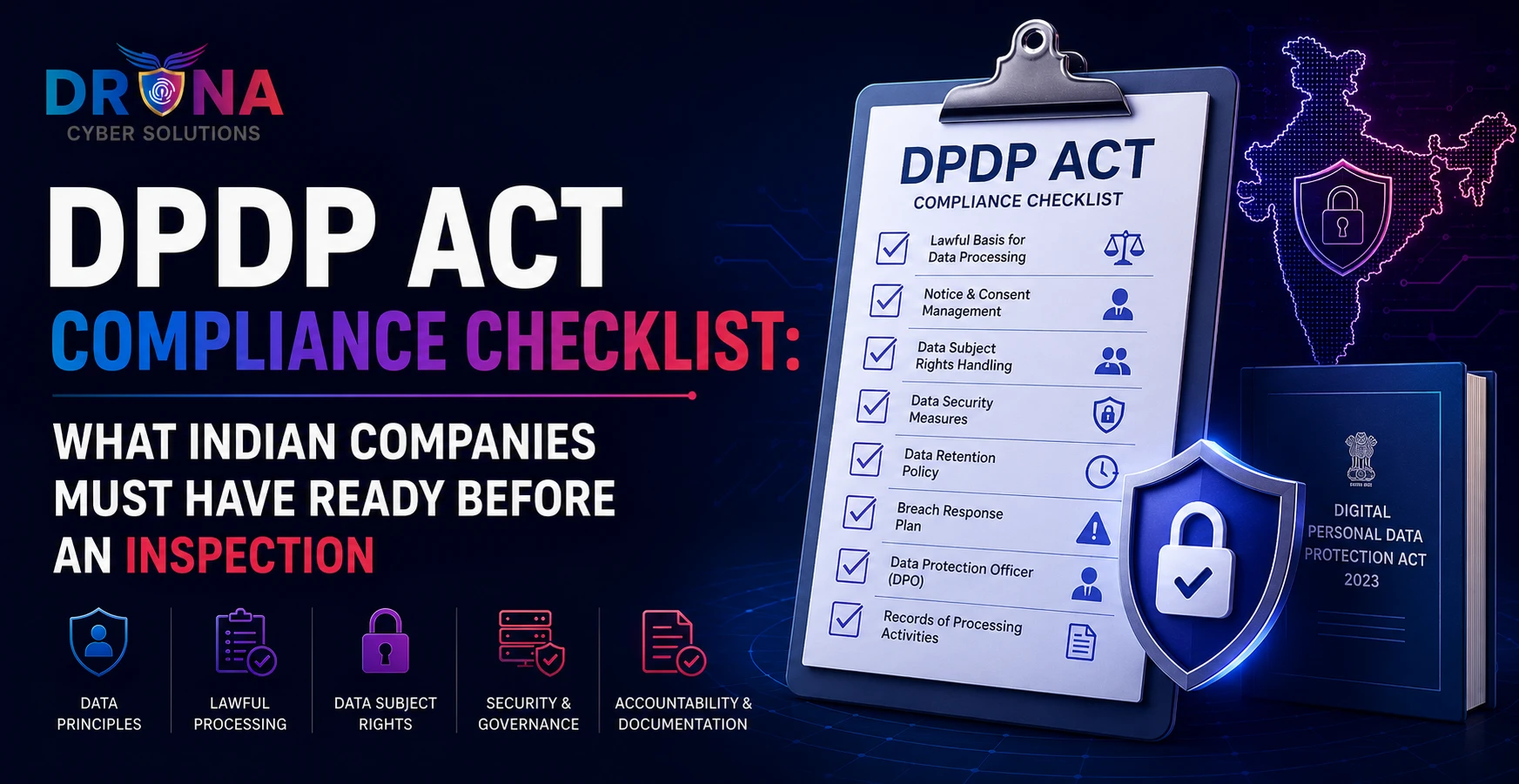
Any useful DPDP Act Compliance Checklist has to look past a privacy policy. Indian enterprises must understand what personal data they have, why they process it, who can access it, how consent and requests are handled, the safeguards in place to protect it, and what the organization will do in the event of a personal data breach.
Digital Personal Data Protection Rules, 2025, were notified in November 2025. The various provisions of the Act and Rules come into effect on a staggered basis. Several key obligations have an 18-month lead time, so companies should confirm the true commencement date of each rule instead of assuming it has commenced.
Here is what businesses should prepare now.
DPDP Act Compliance Checklist for Indian Businesses
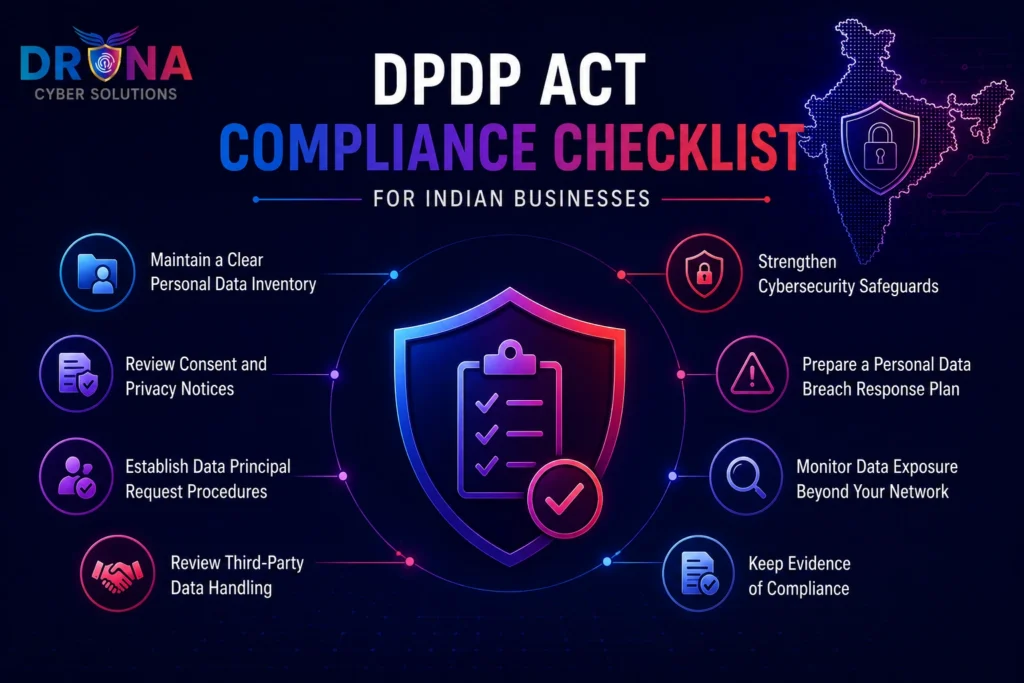
1. Maintain a Clear Personal Data Inventory
Find out exactly which digital personal data your organization gathers and the places it lives. Discover and organize customer, employee, vendor, and other personal information stored in websites, applications, CRM systems, cloud storage, email, and third-party systems. Record the purpose of processing each type of data and the duration for which it is stored.
2. Review Consent and Privacy Notices
Consent tools must state in plain terms the personal data you gather and the reason you process it. The DPDP model requires consent to be free, specific, informed, unconditional, and unambiguous.
Firms should therefore review website forms, applications, marketing databases, and other customer contact points instead of relying on broad or outdated consent wording.
3. Establish Data Principal Request Procedures
Companies must put in place a working system to handle Data Principal requests, including access to information, correction, updating, and erasure.
Record who takes in these requests, the method used to confirm identity, the teams that carry out the work,, and the way each action gets logged. A policy staff that cannot follow day after day will never produce real compliance.
4. Review Third-Party Data Handling
Draw up a list of processors, cloud providers, SaaS platforms, marketing tools and other vendors that process personal data for you.
Review what they are told, why they receive the information, what access they have to it, and how it is protected. Outsourcing processing does not lift the Data Fiduciary’s duty to safeguard personal data.
5. Strengthen Cybersecurity Safeguards
DPDP compliance also touches cybersecurity. Companies must put reasonable security measures in place that stop personal data breaches.
An experienced cybersecurity company can then make a difference at this stage. Access controls, encryption, logging, backups, endpoint security, vulnerability management, and continuous monitoring are all areas firms should consider.
Managed SOC Services provide a real-time view of anomalous activity, and Threat Intelligence Services alert security teams to new threats that could impact their systems.
6. Prepare a Personal Data Breach Response Plan
The response should not be based only on what to do when ransomware invades, or a leak is discovered.
The incident plan should include what to detect, escalate, contain, investigate, collect evidence, and recover, and what notices to issue. The DPDP Rules include clear breach-intimation steps, so preparation starts as soon as those rules apply.
Organizations should tie together Incident Response Services, Digital Forensics Services, and Malware Analysis Services so they can prove what took place, which information was hit, and how the attackers entered.
7. Monitor Data Exposure Beyond Your Network
Personal information can slip outside the organization’s boundaries through stolen credentials, vendor breaches, or insiders acting with bad intent.
Dark Web Monitoring Services help surface leaked credentials and company details. Takedown Services takes back action against phishing websites, fake domains, and online impersonation, while threat intelligence adds further insight into outside cyber risks.
8. Keep Evidence of Compliance
Ahead of any regulatory check, businesses must be ready to show the steps they actually take.
Hold on to records of data inventories, notices, consent steps, security reviews, vendor checks, access-control reviews, breach-response plans, staff training, and the fixes that followed.
The aim is not merely to state that the company meets the DPDP framework. It is to hold papers and day-to-day proof that support that statement.
How Drona Cyber Solutions Supports DPDP Cybersecurity Readiness
Meeting DPDP rules calls for legal, governance, privacy, and cybersecurity efforts, so no cybersecurity company should claim that security work alone makes a firm fully DPDP compliant.
Drona Cyber Solutions can cover the cybersecurity part of DPDP preparation with Complete Cybersecurity Services, Managed SOC Services, Digital Forensics Services, Incident Response Services, Ransomware Response, Malware Analysis Services, Dark Web Monitoring, Threat Intelligence, and Takedown Services.
This joined-up method lets organizations spot security weak points, monitor threats without pause, investigate potential breaches, detect data that has leaked outside, and respond faster when trouble hits.
Conclusion
A solid DPDP Act Compliance Checklist should settle one simple point: can your organization show the path personal data takes from collection through processing, protection, and ongoing management?
As India’s DPDP rules roll out in stages, firms should use the transition window to close gaps rather than wait until every rule is fully in force.
Drona Cyber Solutions helps Indian organizations tighten the cybersecurity controls that sit under that preparation, supplying the monitoring, investigation, threat spotting and incident response tools needed to guard digital personal data and raise overall compliance readiness.
FAQs
1. What is a DPDP Act Compliance Checklist?
A DPDP Act Compliance Checklist lets businesses check personal data collection, consent, security safeguards, vendor management, Data Principal requests, breach response steps, documentation, and the rest of the duties that sit under India’s DPDP framework.
2. What cybersecurity measures are important for DPDP compliance?
Businesses should focus on access controls, encryption, vulnerability management, security monitoring, protected backups, incident response, digital forensics, threat detection, and written procedures for identifying and handling personal data breaches.
3. Can a cybersecurity company help with DPDP Act compliance?
A cybersecurity company can back the technical side through security assessments, Managed SOC, incident response, digital forensics, threat intelligence, and breach investigation, while legal and privacy duties still need the right specialist input.