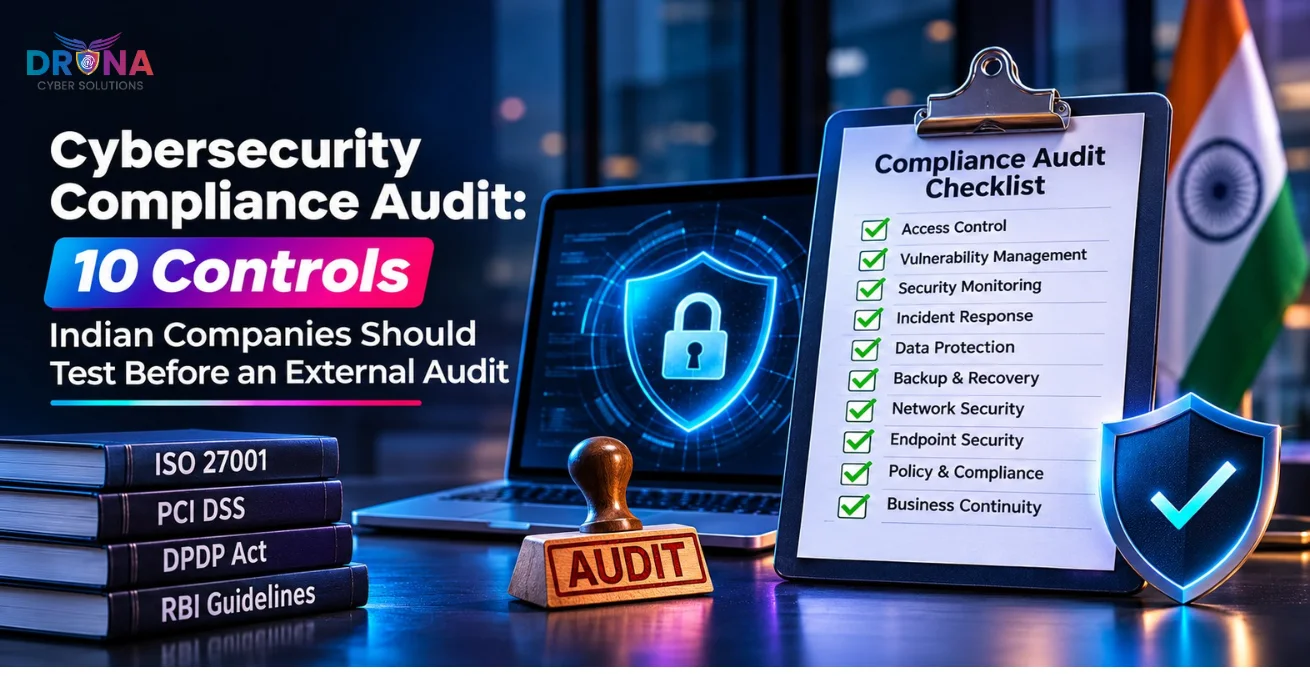
A cybersecurity compliance audit helps Indian companies detect security vulnerabilities before an external auditor does. It is not merely about having policies and documents in place; it is about ensuring critical security controls are in place, regularly tested, appropriately monitored, and supported by evidence.
For organisations preparing for an external audit, testing the right controls helps identify weaknesses in access management, vulnerability management, monitoring, incident response, data protection, recovery, and third-party security.
What Is a Cybersecurity Compliance Audit?
A cybersecurity compliance audit determines whether an organisation’s cybersecurity practices and controls align with its business requirements. These requirements can take the form of regulations, industry standards, contractual obligations, or internal security policies.
The key difference is between having a control and demonstrating that it is effective. An organisation may have an incident response policy, for example, but an auditor may also want to know whether the process has been tested, who is responsible for escalation, and whether previous incidents or exercises were properly documented.
For Indian businesses, requirements may vary greatly by industry and organisation type. CERT-In directions, such as reporting certain cyber incidents, and ICT logs are required.
Why Should Indian Companies Prepare Before an External Audit?
Arranging things at the last minute when the auditor arrives can create issues that may take weeks or months to fix. A company may find that an access review was omitted, high-risk vulnerabilities remain, it lacks access to important logs, or it is unsure of its incident-response duties.
A compliance readiness pre-audit gives you a chance to detect these problems before it is too late to fix them.
It also helps security teams structure evidence around real controls rather than waste the audit period searching for documents. This makes the evaluation more organised and helps management understand where they need to improve security.
10 Controls Indian Companies Should Test Before a Cybersecurity Compliance Audit
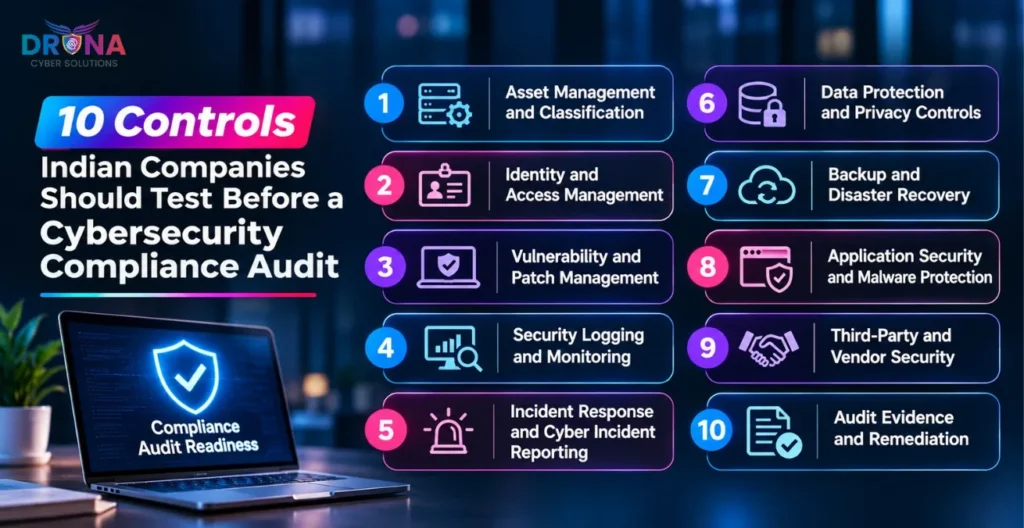
1. Asset Management and Classification
Companies should maintain an accurate inventory of servers, endpoints, applications, databases, and cloud resources, among other key technology assets. The appropriate ownership and classification of all key assets are essential. Organisations must ensure that cloud resources and new systems deployed before an audit are addressed. The incomplete inventory may impact vulnerability management, monitoring, access reviews, and security visibility.
2. Identity and Access Management
Employees should have access only to what they need to do their job. The company should review user accounts, privileged access, administrator permissions, contractor accounts, and former-employee access. Record regular reviews so the organisation can show when permissions were evaluated and what changed. Consider multi-factor authentication for critical systems and accounts where possible.
3. Vulnerability and Patch Management
Vulnerability management must cover the entire process, including discovery, remediation, and validation. Organisations are supposed to determine the high-risk vulnerabilities, assign accountability, develop remediation schedules, and ensure that the remedies are effective.
Pay special attention to internet-facing systems, as externally accessible infrastructure is more vulnerable. Document risk decisions and compensating controls, where needed, for unresolved vulnerabilities.
4. Security Logging and Monitoring
Companies are advised to ensure critical systems produce relevant security logs and that the logs are secured and stored as required. The CERT-In directions include requirements for ICT log retention for covered entities.
Organisations should also determine who will review security alerts and escalate suspicious activity. Managed SOC services can support continuous alert monitoring and investigation.
5. Incident Response and Cyber Incident Reporting
An organisation should document a process for identifying, escalating, containing, investigating, and communicating cyber incidents. Clearly delegate responsibilities before an emergency. Companies should also know the appropriate reporting requirements.
For entities under CERT-In’s guidance, specified cyber incidents must be reported within six hours of detection or realisation. Incident Response Services may assist organisations during an incident.
6. Data Protection and Privacy Controls
Businesses should know what personal information they collect, where they keep it, who can access it, and how they secure it. Organisations should also determine which provisions of India’s data protection framework apply.
The DPDP Rules, 2025, were notified on November 14, 2025, with provisions taking effect according to a phased timeline. Technical and organisational security controls should align with privacy requirements.
7. Backup and Disaster Recovery
Do not assume backups are good; test them. Organisations should ensure important data is stored appropriately and that the recovery process is effective.
Include important business systems in recovery testing, and consider scenarios such as ransomware or infrastructure failure.
Ransomware Response Services may supplement recovery planning for organisations that require structured assistance with encryption, data theft, extortion, and operational disruption.
8. Application Security and Malware Protection
Websites, business software, applications, and APIs must be evaluated for security vulnerabilities during their lifecycle. Security teams should remediate and validate vulnerabilities identified during testing. After the initial alert, teams also investigate suspicious files to understand their behaviour and potential impact.
Malware Analysis Services can help security teams investigate malicious files and detect indicators to determine whether other systems are affected.
9. Third-Party and Vendor Security
When cloud providers, SaaS providers, IT vendors, consultants, and other third parties access company systems or information, they may pose security risks. Organisations need to identify key vendors, assess their security needs, manage third-party access, and develop incident-notification procedures. Vendor assessments should not be limited to onboarding; critical relationships must be checked regularly based on risk.
10. Audit Evidence and Remediation
A security control is difficult to demonstrate without evidence that it operates. Other significant controls include records of access reviews, vulnerability remediation, backup testing, incident exercises, monitoring activities, and more. A compliance readiness assessment can map requirements against available evidence, identify gaps, assign ownership, and set remediation timelines before the external audit.
Conclusion
Are you confident your business will pass its next cybersecurity compliance audit? What if an external auditor discovers unpatched vulnerabilities, weak access controls, missing compliance evidence, or ineffective incident response procedures? These gaps can lead to repeated audit findings, costly corrective actions, and greater exposure to cyber threats.
Why wait for an audit failure when you can identify and fix these weaknesses beforehand?
As a cybersecurity compliance audit company in India, Drona Cyber Solutions helps businesses assess existing security controls, uncover compliance gaps, and prioritise corrective actions before an external review. Through its Compliance Audit Services, supported by Managed SOC Services, Cyber Threat Intelligence, Incident Response, and Digital Forensics, Drona helps organisations strengthen their security posture while improving audit readiness.
Don’t let overlooked security gaps put your next compliance review at risk. Partner with Drona Cyber Solutions to identify vulnerabilities, strengthen critical controls, and prepare your business for an external cybersecurity audit with greater confidence.
Contact Drona Cyber Solutions today to schedule a cybersecurity compliance assessment.