
The most common error companies commit regarding the Digital Personal Data Protection Act, 2023 involves thinking fines only kick in after a big data leak occurs.
This view is wrong. Fines under the DPDP Act relate directly to everyday operational issues such as inadequate security measures, slow or faulty breach notifications, flawed consent processes, and insufficient care in handling personal data. Put simply, companies can end up paying substantial amounts not only for attacks but also for being caught off guard without proper preparation.
The money at stake is quite large. The Act allows fines of up to ₹250 crore depending on the seriousness of the violation.
This turns DPDP rules into a real business hazard instead of just another legal checkbox.
Understanding Where DPDP Penalties Come From
DPDP fines do not appear out of nowhere. They stem from clear problems in the way organizations manage personal data day to day.
Teams usually pay attention to privacy statements and consent paperwork, yet real trouble often starts with day-to-day data practices within the company.
Failure to Protect Personal Data
A key duty in the Act requires companies to put in place suitable security protections. When personal data gets exposed due to insufficient internal defenses, organizations risk heavy fines.
Cybersecurity Services play a direct role here by closing those protection holes early before regulators step in.
Failure to Report Data Breaches Properly
Once a data breach takes place, getting the notification right matters a lot. Late notices, missing details, or poor internal handoffs lead to compliance issues. Companies need real operational preparedness, not just basic knowledge.
Digital forensic Services matter in these cases because thorough breach probes lead to clear facts and accurate notifications.
Major Compliance Failures That Trigger DPDP Penalties
The majority of fines under the Act result from practical errors that companies could have prevented.
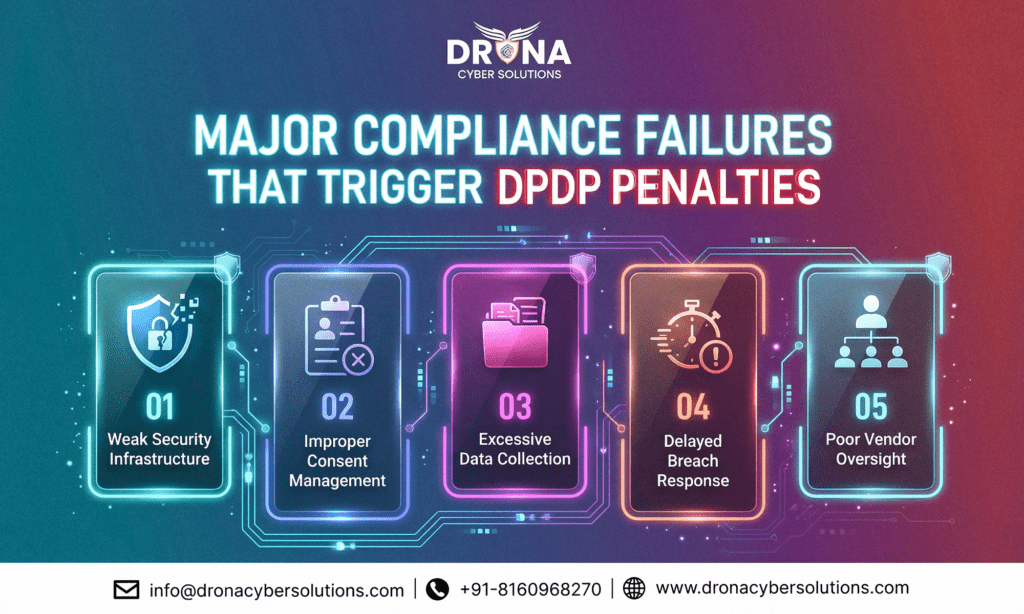
Weak Security Infrastructure
Loose access controls, poor password habits, outdated software, and systems without proper monitoring all increase the risk of a breach. The DPDP Act expects companies to apply reasonable security measures. Poor cybersecurity setups no longer count as simple tech problems. They become direct compliance risks. Companies that work with organized Cybersecurity Services build better monitoring, tighter access rules, and stronger prevention tools.
Improper Consent Management
Consent in DPDP needs to stay clear, based on full information, and limited to exact purposes. Plenty of companies continue to rely on vague or combined consent wording that falls short of the rules. Bad consent leaves shaky legal support for using the data and raises the odds of enforcement action. Companies have to keep accurate consent records and track how data moves.
Excessive Data Collection
Gathering personal data that goes beyond what operations actually require adds extra risk. The Act calls for collecting data only for specific purposes. Extra data increases the chances of exposure. Greater exposure leads to bigger problems if a breach hits. Cutting back on unneeded data collection lowers compliance risks right away.
Delayed Breach Response
Slow handling of a breach leads to worse outcomes. Late internal action hurts the quality of the probe, the accuracy of reports, and efforts to limit harm. Digital forensic Services step in here by letting organizations quickly pin down what was affected, when it happened, and why. Quick probes lead to better compliance actions.
Poor Vendor Oversight
Third-party processors that handle personal data pose hidden compliance risks. If problems on the vendor’s side cause a breach, the main company can still be held responsible. Regular checks on vendor risks and their security levels need to be included in compliance plans.
Financial Impact of DPDP Penalties on Businesses
The fine amount forms just one piece of the total harm. The wider effects usually run much deeper.
Direct Financial Penalties
DPDP fines can run into several crores, depending on the severity of the issue. Companies that handle large amounts of personal data may face high costs even from a single compliance slip.
Regulatory Scrutiny and Audits
After officials spot a compliance issue, companies often face more checks from internal and external teams. This adds workload and extra stress on leaders.
Customer Trust and Business Reputation
Compliance problems hurt confidence. People expect their personal details to stay safe. When that fails, it harms the company’s standing over time.
How Businesses Can Avoid Costly DPDP Mistakes
Staying clear of fines depends less on reading legal details and more on solid day-to-day practices.
Strengthen Security Safeguards
Good access controls, data encryption, device protection, ongoing threat monitoring, and regular vulnerability checks all reduce personal data risks. Effective Cybersecurity Services boost both protection levels and compliance strength. Drona Cyber Solutions works with companies to build solid operational cybersecurity setups that improve DPDP preparedness.
Improve Incident Investigation Capability
When problems arise, companies need fast answers about what took place. Quick probes lead to better reports and less trouble with regulators. Organized Digital forensic Services enable companies to conduct fact-based breach assessments and identify the root causes. Drona Cyber Solutions assists companies with detailed digital forensic work and incident preparation.
Review Internal Data Handling Processes
Businesses should check the following:
- How data is collected
- where data is stored
- Who can access it
- How long is it retained
Clear visibility into operations helps ensure tight compliance.
Strengthen Third-Party Risk Management
All vendors who manage personal data need regular reviews. How secure those vendors are directly influences your own compliance risks.
Build Faster Breach Response Workflows
Companies should set up straightforward internal steps for:
- breach detection
- escalation
- investigation
- reporting
Faster action leads to better compliance results.
Why Cybersecurity and Compliance Must Work Together
DPDP compliance and cybersecurity no longer operate as separate areas. Gaps in security lead to compliance breakdowns. Weak breach management brings regulatory trouble. Inadequate probes create notification problems. That is why companies require both organized Cybersecurity Services and skilled Digital Forensic Services as part of their compliance approach. Compliance with real security remains unfinished. Security without attention to compliance rules stays dangerous.
Conclusion
Penalties under the DPDP Act go beyond monetary fines. They show the results of loose operational habits. Most companies do not get into trouble by completely ignoring the rules. They run into issues because they miss everyday weak spots such as poor security, slow responses to breaches, faulty consent practices, and weak investigations.
These errors can be fixed in advance. Drona Cyber Solutions helps companies reduce DPDP compliance risks through improved Cybersecurity Services, faster incident response, and skilled Digital Forensics Services. By strengthening daily security and investigative readiness, companies build stronger compliance positions and reduce their risk of incurring costly regulatory fines.