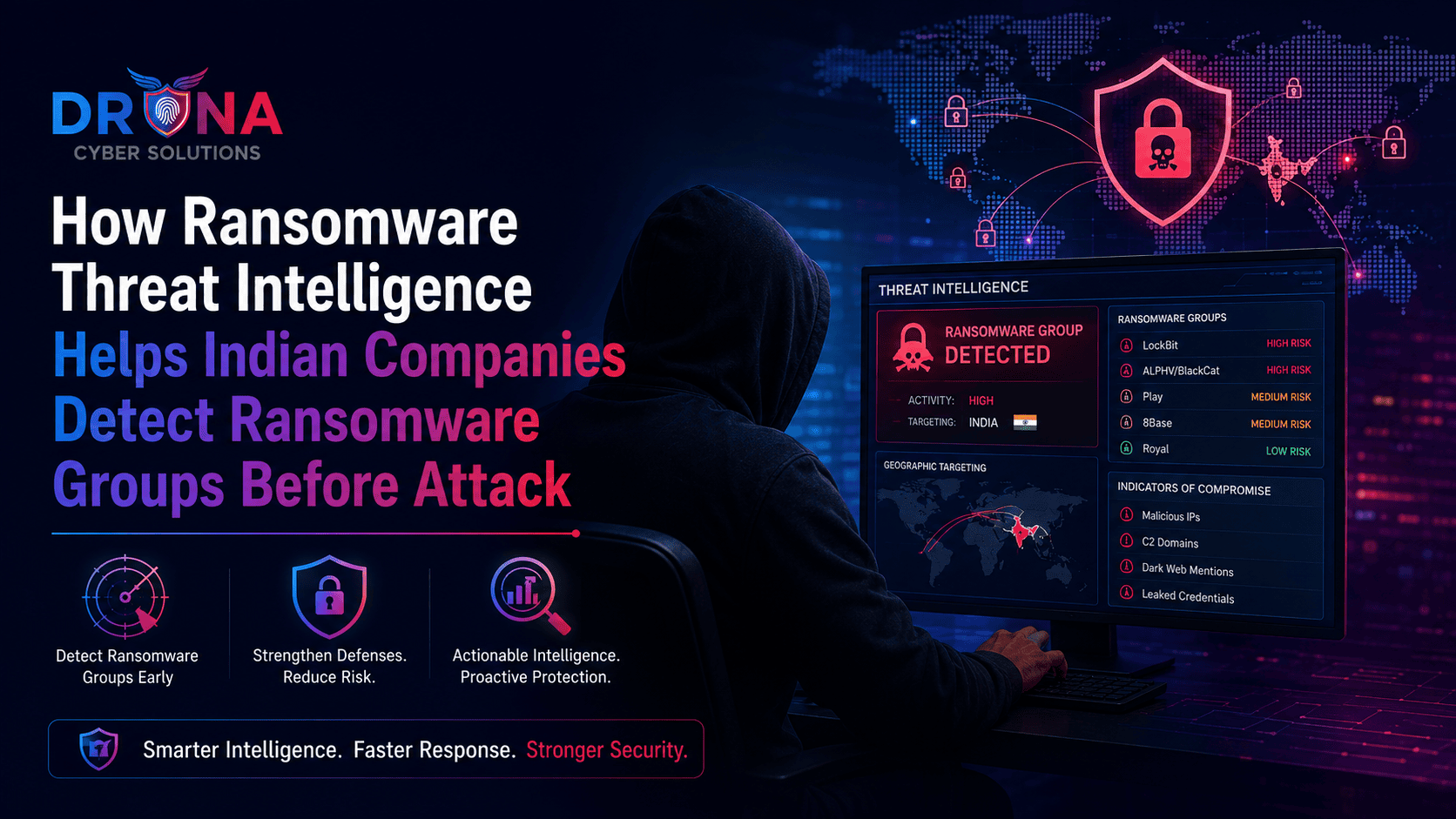
Typically, ransomware does not begin with a ransom note appearing on a screen. Attacks rarely start with data breaches or encryption; instead, they begin with stolen credentials, scans of open infrastructure, purchases from initial access brokers, the creation of malicious websites, or discussions of compromised organizations in criminal forums.
This is where ransomware threat intelligence comes in. Organizations can monitor external signals related to ransomware groups, ransomware infrastructure, and emerging campaigns, rather than just monitoring what’s happening on their networks.
Combined with Managed SOC Services, Dark Web Monitoring, Malware Analysis, and Incident Response Services, ransomware threat intelligence creates a preemptive warning system for Indian businesses. Security teams have additional time to investigate suspicious activity before it becomes a complete ransomware attack.
Types of Ransomware Attacker Groups in India
No single type of ransomware attacker targets Indian businesses. Each group has different objectives, resources, and attack models.
Ransomware-as-a-Service Groups
Ransomware-as-a-Service (RaaS) separates ransomware development from the ransomware attack. The core operators create the ransomware infrastructure, and the affiliates hack into victims, drop it, and then share the profits with the operators.
Threat intelligence teams can use the graph to identify relationships between operators and affiliates, better connect attacks, and uncover correlations with known ransomware ecosystems.
Data-Theft and Double-Extortion Groups
Some ransomware operators don’t bother with full encryption. They extract highly sensitive data first, then disrupt systems, threatening to publish it if the victim does not pay.
Ransomware leak site monitoring therefore stays useful even when a company has not yet found encrypted systems. Mentions of a company, its data, or its partners can serve as an outside clue that further checking is needed.
Initial Access Brokers and Ransomware Affiliates
Initial access brokers focus on breaking into organizations and selling that access to other criminals. The buyer may later turn out to be a ransomware affiliate.
Stolen VPN credentials, open remote services, and compromised employee accounts can therefore become ransomware entry points. Combining Dark Web Monitoring Services with ransomware actor monitoring helps security teams spot credential exposure before criminals use it further.
Top Ways Ransomware Threat Intelligence Helps in Detecting Groups and Eliminating the Damage
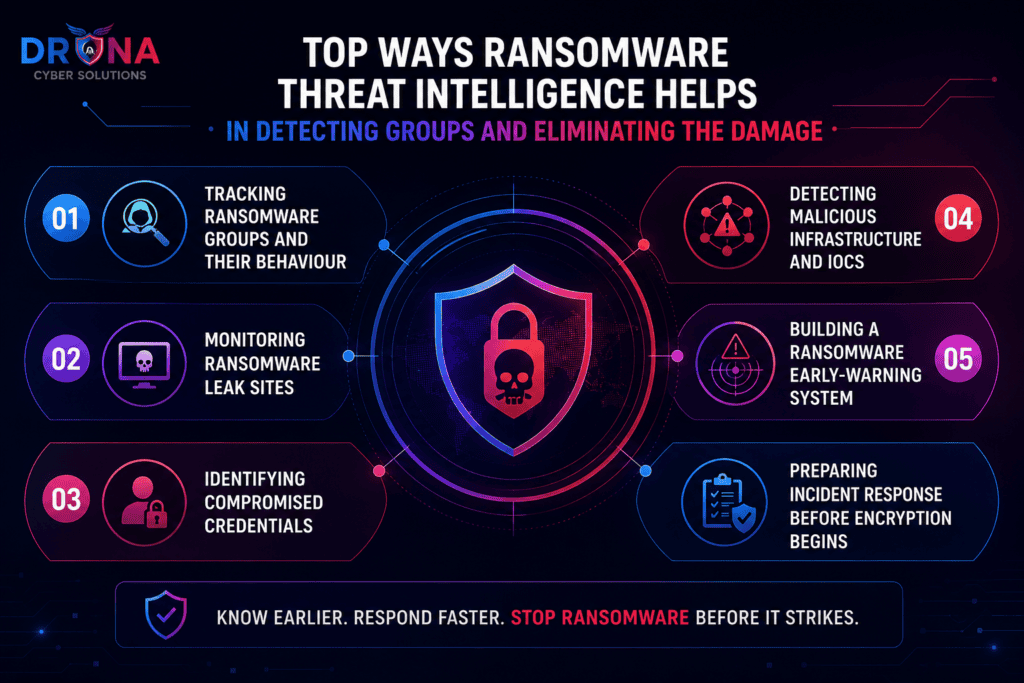
Ransomware Threat Intelligence is not simply a list of ransomware group names. It should help security teams understand which actors matter, what signals they produce, and what action an organization should prioritize.
1. Tracking Ransomware Groups and Their Behaviour
Ransomware group tracking helps security personnel understand which ransomware groups exist, which industries they target, and the TTPs associated with their campaigns.
When intelligence flags behavior linked to a known group, a managed SOC service can match that information against internal security events. Analysts then get extra context when investigating suspicious activity, rather than treating every alert in isolation.
2. Monitoring Ransomware Leak Sites
Ransomware groups often use leak sites as part of their extortion work. Watching these places can catch victim announcements, claims about stolen data, and shifts in criminal activity.
Ransomware leak site monitoring can therefore support internal detection. If a company, supplier, or related entity shows up in ransomware intelligence, security teams can check systems, credentials, and access logs rather than waiting for more signs of compromise.
3. Identifying Compromised Credentials
Credentials taken through phishing, infostealer malware, or earlier breaches can give attackers an easier way into company systems.
Ransomware threat intelligence and dark web monitoring can surface exposed employee credentials, combolists, and infostealer records. Companies can then reset the affected credentials, review login activity, and tighten access controls before the exposed information gets reused.
4. Detecting Malicious Infrastructure and IOCs
Ransomware needs infrastructure, such as malicious domains, IP addresses, command-and-control servers, and other indicators of ransomware.
Ransomware infrastructure monitoring and indicators of compromise (IoCs) enable security teams to identify ransomware connections in their environment.
Malware Analysis Services can also perform deeper analysis into suspicious files, behavior, capabilities and any potential links to known ransomware families.
5. Building a Ransomware Early-Warning System
No single clue proves that ransomware is about to hit. The real edge comes from linking several weak signals together.
A credential leak, odd authentication, contact with a malicious domain, and intelligence about a ransomware actor become much more meaningful when viewed as a set.
Combining ransomware early-warning intelligence with 24×7 SOC monitoring lets organizations investigate these signals sooner and rank risks by actual relevance.
6. Preparing Incident Response Before Encryption Begins
Threat intelligence should lead to clear action.
When intelligence points to credible ransomware activity, companies can check privileged accounts, isolate suspicious endpoints, keep relevant logs, and examine affected systems.
Pre-coordinating with Incident Response Services and Digital Forensics Services also helps ensure evidence is preserved if the suspicious device becomes a confirmed compromise.
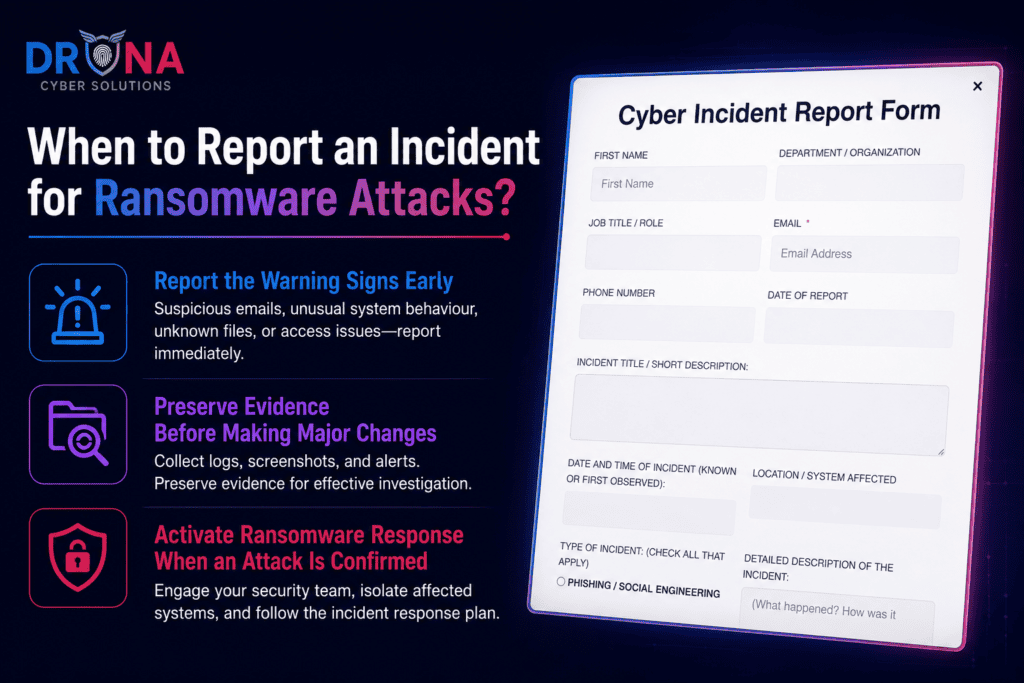
When to Report an Incident for Ransomware Attacks?
Businesses should not wait until files get encrypted before treating ransomware activity as an incident.
Raise a ransomware incident when teams spot suspicious encryption, ransom messages, unauthorized privileged access, unexplained account activity, known malicious communications, data exfiltration, compromised credentials being actively used, or intelligence showing that company systems or data may already be inside ransomware activity.
Drona Cyber Solutions offers a dedicated Cyber Incident Report Form that lets organizations report malware and ransomware incidents, including affected systems, users, estimated impact, potentially compromised data, detection method, and actions already taken.
Report the Warning Signs Early
If ransomware has not been detected, treat unusual activity as something to take seriously, not ignore. Early reporting gives analysts an opportunity to determine whether it is a harmless signal, an intrusion attempt, or part of an active compromise.
Preserve Evidence Before Making Major Changes
Logs, suspicious emails, malware files, authentication records, and affected devices may hold important evidence. Digital forensics services can help preserve and examine this information to rebuild the attack timeline and identify the initial entry point.
Activate Ransomware Response When an Attack Is Confirmed
If ransomware is already active, containment becomes urgent. Drona Cyber Solutions runs 24×7 monitoring alongside ransomware response, incident response, digital forensics, dark web monitoring, and malware analysis services. This setup lets different parts of the incident move through a joined response instead of separate investigations.
Conclusion
Once ransomware encrypts systems, uses sensitive data, or disrupts business operations, it becomes much harder to stop. Ransomware threat intelligence helps Indian businesses stay ahead by detecting compromised credentials, ransomware infrastructure, leak-site activity, and more early in the process, linked to active ransomware threat groups.
Drona Cyber Solutions helps businesses turn these signals into action through 24×7 Managed SOC Services, Dark Web Monitoring, Malware Analysis, Digital Forensics, Incident Response, and Ransomware Response Services. Instead of waiting for a ransom note to confirm an attack, Drona’s security specialists can investigate suspicious activity, assess exposure, and coordinate the response when warning signs appear.
If your organization notices ransomware activity, inform Drona Cyber Solutions and start investigating the situation before the threat can spread further.
Frequently Asked Questions
What is ransomware threat intelligence?
Ransomware threat intelligence collects and analyses data regarding ransomware groups, ransomware infrastructure, ransomware methods, compromised credentials, and ransomware campaigns. It helps organizations identify relevant threats and investigate them earlier.
Can threat intelligence predict a ransomware attack?
It cannot promise that a specific attack will happen. Still, it can flag warning signals and known attacker behavior that help security teams check for possible ransomware exposure before clear disruption starts.
What are common ransomware attack indicators?
Some signs of a potential ransomware attack include compromised credentials, suspicious remote access, links to known malicious infrastructure, malware activity, unusual privileged account use, and business data found in ransomware or cybercrime environments.
Why is dark web monitoring important for ransomware protection?
Dark web monitoring can detect exposed credentials, stolen information, and criminal chatter related to an organization. These findings give security teams early warning signals to investigate before attackers exploit the exposure.
When should an Indian company report a suspected ransomware incident?
If there are any clear indications of compromise, companies should report any suspicious activity instead of waiting for the encryption. Early reporting lets security teams investigate, preserve evidence, contain threats, and determine whether ransomware is already present.