Security Operations Centers were built for a different time. Back then, alerts came in smaller numbers, attacks moved more slowly, and human analysts could actually handle the incoming threats. That time has passed.
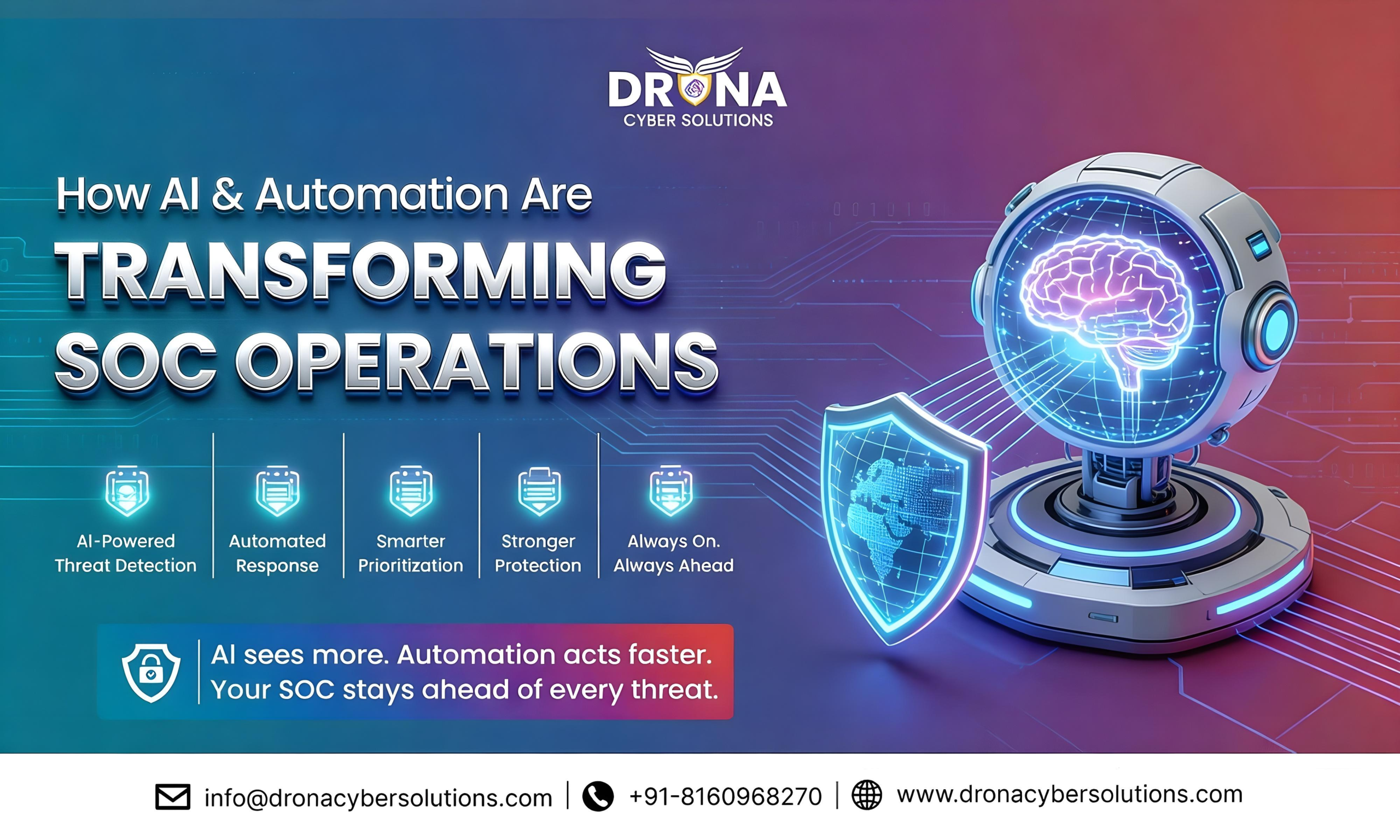
Today’s SOC teams face thousands of alerts daily, complex attack chains, and attackers who use automation. Manual work simply cannot keep pace. This is why AI and automation have become more than helpful tools. They have become the backbone of the modern SOC.
AI-enabled SOC systems are changing the way analysis, detection and management of threats are done. AI reduces noise, accelerates responses, and lets security teams focus on the issues that matter. The transition is no longer voluntary. It is already taking place.
Problem with Traditional SOC Operations
Traditional SOC arrangements were built on the assumption that people would do the majority of the work. Analysts monitored notifications, investigated cases, and responded manually. This approach worked earlier, but it falls short against today’s threats.
Alert Overload and Analyst Fatigue
Security tools produce huge numbers of alerts. Many turn out to be false positives. Analysts waste hours sorting through noise instead of tackling real dangers. Over time this causes tiredness and leads to missed serious events.
Slow Response and Delayed Decisions
Checking alerts manually takes too long. By the time someone reviews and escalates an alert, attackers may have already gone further into the network. Speed matters, and old SOC methods often cannot match it.
Lack of Context Across Systems
Today’s attacks cross endpoints, networks, and cloud setups. Without linking the signals, they look unrelated. Analysts find it hard to understand the complete story, which leaves investigations unfinished.
This is where AI and automation begin to transform the work of SOC.
How AI Enhances Threat Detection
AI has the ability to analyze trends that are out of reach of humans. It moves detection away from fixed rules toward understanding actual behavior.
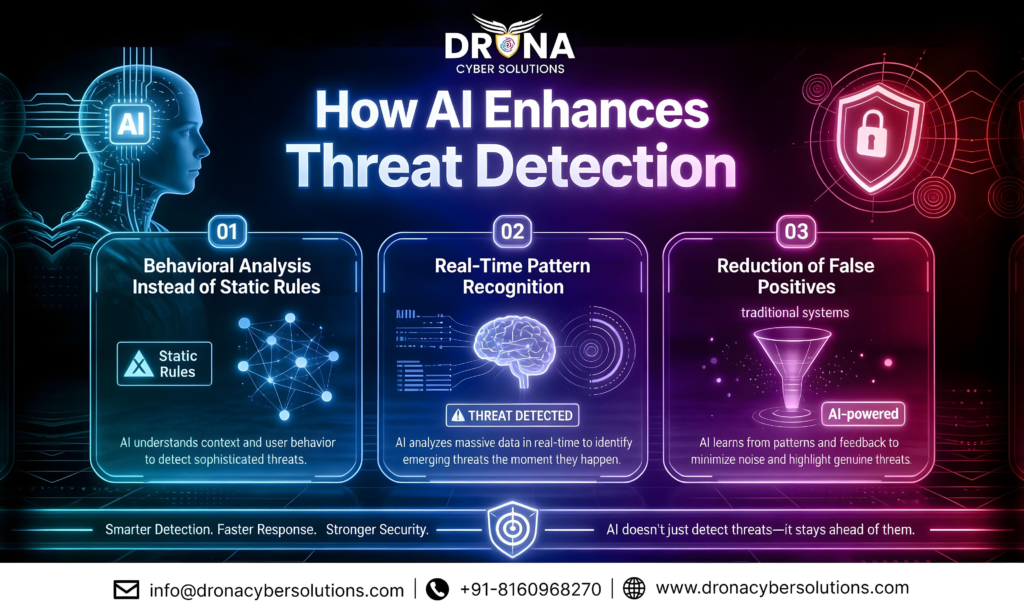
Behavioral Analysis Instead of Static Rules
Old systems depend on set rules. AI studies what normal activity looks like inside systems and spots anything unusual. This helps catch threats that do not match known patterns.
Real-Time Pattern Recognition
AI keeps processing large amounts of data and picks up suspicious activity right away. It joins signals from different systems and uncovers attack paths that would stay hidden otherwise.
Reduction of False Positives
One major benefit of AI is how well it removes noise. By reading the full situation, it focuses on alerts that truly need attention and lightens the load on analysts.
Automation in SOC: From Manual to Autonomous Actions
Automation changes the daily work of SOC teams. It takes away repeated jobs and delivers quicker, more uniform responses.
Automated Alert Triage
Instead of people checking every single alert, automation sorts and ranks them. Only the serious ones move up for review, which raises overall efficiency.
Faster Incident Response
Automation allows instant steps such as cutting off endpoints, stopping bad IP addresses, or locking affected accounts. This shortens response time by a large margin.
Standardized Workflows
Automation makes sure every incident follows the same clear steps. This lowers mistakes caused by people and keeps responses consistent.
AI and Automation in Threat Hunting
Threat hunting was once the act of highly qualified researchers going on a hunt to find latent risks. This work is more prospective and scalable with AI and automation.
Continuous Monitoring and Analysis
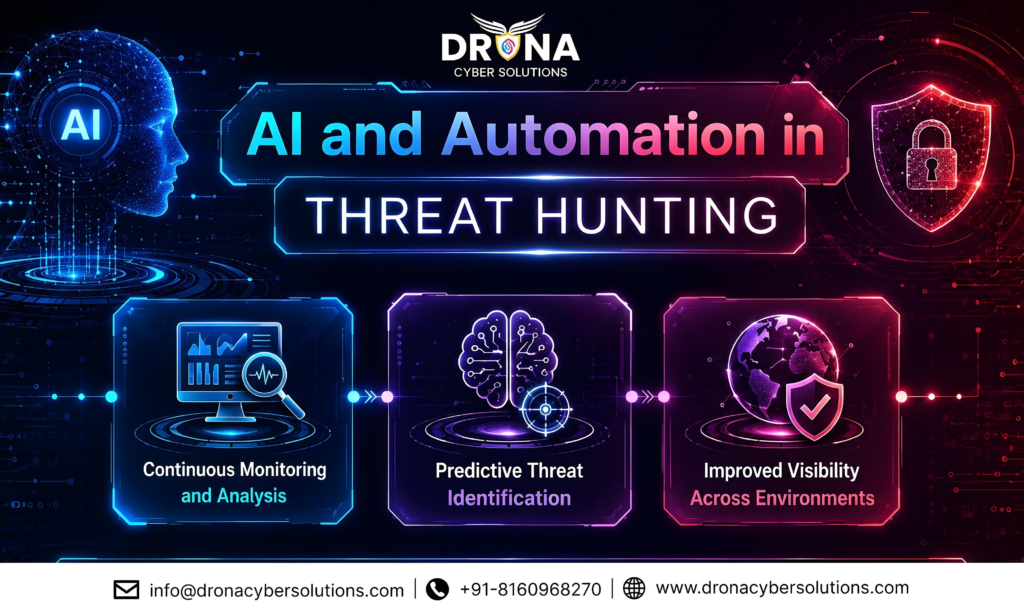
AI keeps scanning systems for odd patterns, so teams do less manual searching. It can spot possible threats even before any alert goes off.
Predictive Threat Identification
AI uses past information to predict future attack methods. This gives organizations time to get ready before anything happens.
Improved Visibility Across Environments
AI combines data from numerous locations to generate a single transparent perspective on risks across networks, endpoints, and cloud solutions.
Enhancing Incident Response with AI
Whether security prevails or fails is determined by incident response. The actual challenge does not lie in locating an attack but in understanding it quickly and halting it precisely. AI transforms the entire process by reducing investigation time, increasing accuracy, and accelerating containment.
Real-Time Correlation Across Multiple Signals
Modern attacks leave traces across endpoints, networks, cloud records, and user actions. Connecting these pieces manually takes time and often misses connections. AI links events immediately and turns scattered information into one clear picture of the incident. Teams can then see the full reach of an attack without waiting.
Faster Root Cause Identification
A major delay in incident handling comes from determining how the attack began. AI reviews old logs, user habits, and system changes to find the exact starting point. Teams no longer spend hours digging. They get quick answers on whether the problem started from phishing, stolen credentials, or a system weakness.
Intelligent Prioritization of Incidents
Not every alert needs fast action, yet picking the important ones is tough when volumes are high. AI weighs risk using behavior, possible damage, and surrounding details so the most serious incidents get handled first. This prevents teams from wasting time on minor alerts while real dangers escalate.
Automated Containment Actions
During an active attack, every second counts. AI systems can initiate automated procedures such as isolating compromised endpoints, blocking malicious IP addresses, or closing dangerous accounts. These actions occur within a couple of seconds and severely restrict the attacker’s network range.
Continuous Learning from Every Incident
AI does not consider incidents as one-time events butas learning opportunities. It learns what to detect and respond to as it goes. Experience from previous cases helps it track down similar threats faster in the future and build a defense that continues to improve.
Supporting Analysts with Actionable Insights
AI does not replace human knowledge. It strengthens it. Rather than burying analysts with raw information, it provides concise summaries, recommendations on the next steps and helpful background. This helps teams make decisions more quickly and confidently under intense pressure.
Reducing Response Time Without Compromising Accuracy
Combining automation and smart analysis shows that incidents are addressed quickly while remaining accurate. AI reduces the number of people involved in the manual work process, yet maintains the response process in an orderly, precise manner.
Benefits of AI-Driven SOC Operations
AI and automation provide evident benefits for SOC teams’ performance.
Reduced Response Time
Threats are identified and prevented sooner, thereby limiting the harm they cause.
Improved Accuracy
AI reduces false positives and improves detection quality.
Better Resource Utilization
Analysts can devote their time to valuable activities rather than to routine tasks.
Scalability
AI also allows SOC to expand its operations without necessarily increasing its workforce.
Challenges in Implementing AI in SOC
Even though AI brings significant benefits, implementing it poses its own challenges.
Data Quality and Integration
AI needs good data to work well. Weak or messy data hurts its results.
Skill Gap
Companies must have trained people who can run and understand AI tools.
Over-Reliance on Automation
Automation is not to replace analysts but assist them. Humans are not supposed to lose control.
The Future of SOC Operations
SOC work is moving toward security systems that operate more independently. AI will continue to advance, enabling faster detection, smarter review, and more forward-looking protection.
Companies that adopt AI-driven SOC methods will hold a clear edge against today’s cyber threats.
Conclusion
Moving to AI and automation in SOC operations is not simply a passing trend. It has become necessary because modern cyber threats are larger and more complicated than before. Old methods can no longer keep pace with or outsmart current attacks.
Organizations need smart, automated, and expandable security operations to stay safe. This is the area where Drona Cyber Solutions makes a real difference.
Drona Cyber Solutions provides advanced SOC features powered by AI and automation that deliver real-time threat monitoring, faster incident handling, and well-organized security operations. With round-the-clock command and control, businesses gain nonstop visibility and protection against evolving cyber threats.
In an environment where threats cannot be avoided, the ability to detect, respond to, and adjust fast determines how secure you stay. AI-driven SOC operations make this possible, and Drona Cyber Solutions makes sure it works properly.