
India’s rapid digital expansion has opened up significant opportunities for companies, yet it has also brought real risks when it comes to handling data and keeping it private. Businesses operate on large datasets and the information they fetch, which is why it is their responsibility to keep that data safe and secure.
The Digital Personal Data Protection Act, 2023, changed the rules for how companies should handle personal data. Securing the systems carrying the data is not enough now. Businesses now need to show clear openness, take full responsibility, and follow the rules at every step of handling data.
To meet these demands, more companies are turning to Cybersecurity services in India and partnering with a digital forensics company. This helps them set up appropriate protection, conduct proper checks, and stay ready for compliance.
Understanding the DPDP Act
The DPDP Act is India’s primary law governing the handling of personal data. It lays out a straightforward structure for how organizations collect, store, and use people’s information.
Under this law, businesses become data fiduciaries. That means they must ensure personal data is processed in a legal and safe manner. They need to obtain proper consent, limit data use, and protect sensitive information against unauthorized access.
The act also sets tough rules for reporting breaches and holding people accountable. Companies have to prove how they manage data and react quickly if something goes wrong.
This is exactly where Cybersecurity services in India come in as a base layer to keep systems safe. At the same time, a Digital Forensic Company in India steps in to help with proper investigation and to meet compliance requirements through solid evidence.
Advantages of DPDP Compliance for Organizations
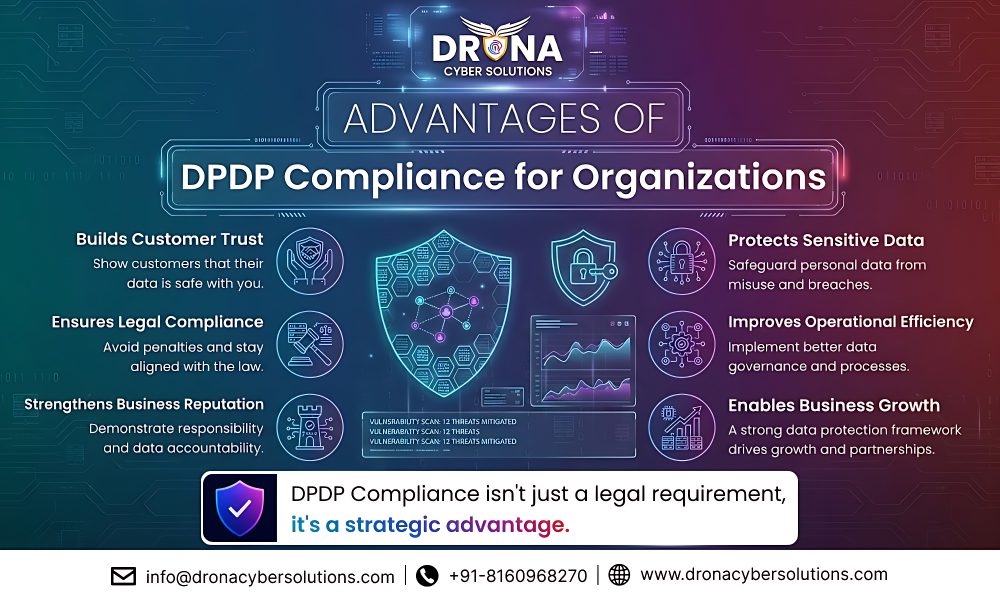
Following the DPDP Act brings several practical gains for businesses that go well beyond mere compliance. It strengthens operations, builds trust, and reduces risk.
Strengthening Customer Confidence
People are now more serious about their data, and they have finally learned to be alert about privacy. Businesses that follow DPDP handle data carefully, which builds trust and makes the brand look reliable.
Companies that use Cybersecurity services in India find it easier to safeguard customer information and maintain those relationships in the long run.
Minimizing Risk of Data Breaches
Following DPDP means companies will have to implement strict security measures, reducing the risk of unauthorized entry and data leaks.
Well-organized security setups, backed by Cybersecurity services in India, help companies stay protected against new threats that keep emerging.
Enabling Faster and Structured Incident Response
In a breach scenario, how quickly and accurately you respond determines the whole plot. A digital forensic company in India helps organizations by identifying the issues instantly and fixing it the right way.
Supporting Legal and Regulatory Readiness
Being compliant means companies stay prepared for audits and any legal checks. Good records and proper investigative tools make it easier to meet regulatory requirements.
Improving Internal Data Management
DPDP pushes for orderly ways of handling data. This results in data organized neatly, less repetition, and smoother day-to-day operations.
Enhancing Business Credibility
Businesses that stick to DPDP stand out in a good way. Customers, investors, and other partners view them as dependable choices.
Enabling Sustainable Digital Growth
Compliance lets companies expand safely without taking on extra risks. It lays a solid base for continued growth over time.
Penalties for Non-Compliance of DPDP Act 2023
The Digital Personal Data Protection Act, 2023 introduced a penalty for those organizations who do not treat personal data carefully. Any failure to follow the rules counts as a major issue, and the fines depend on the seriousness of the mistake.

Failure to Implement Reasonable Security Safeguards
When a company fails to protect personal data because its security setup is too weak, it can face fines of up to ₹250 crore. This covers breaches caused by poor systems, weak controls, or inadequate monitoring.
Failure to Report Data Breaches
Companies must inform the authorities and the affected individuals as soon as a data breach occurs. Not reporting it can bring penalties as high as ₹200 crore.
Non-Compliance in Handling Children’s Data
The DPDP Act imposes even tighter duties regarding children’s personal data. Breaking these rules can result in fines of up to ₹200 crore.
General Non-Compliance with Provisions
Any slip in areas such as obtaining consent, following data processing rules, or keeping necessary records can result in penalties of up to ₹50 crore.
Enforcement by the Data Protection Board of India
The Data Protection Board of India decides the penalties. They look at details such as the type of breach, how long it lasted, and whether the same problem has happened before.
These fines make it clear that following the rules is not a choice. Businesses need to implement proper security and investigative methods to avoid financial losses and operational trouble.
Conclusion
The Digital Personal Data Protection Act goes beyond being just one more rule. It marks a real change in how businesses need to think about data, security, and responsibility. Companies that follow DPDP not only avoid penalties but also create more robust, dependable operations.
Drona Cyber Solutions is a reliable Digital Forensics Company in India. They offer strong investigation skills along with expert Cybersecurity services in India. By combining security measures with forensic expertise, they help businesses determine what happened in incidents, meet compliance requirements, and strengthen their overall security posture.
In the current digital world, DPDP is not simply important for business. It has become necessary to build trust, protect data, and support steady, long-term growth.
Drona Cyber Solutions helps businesses stay protected from cyber threats with advanced security, real-time monitoring, and expert support.