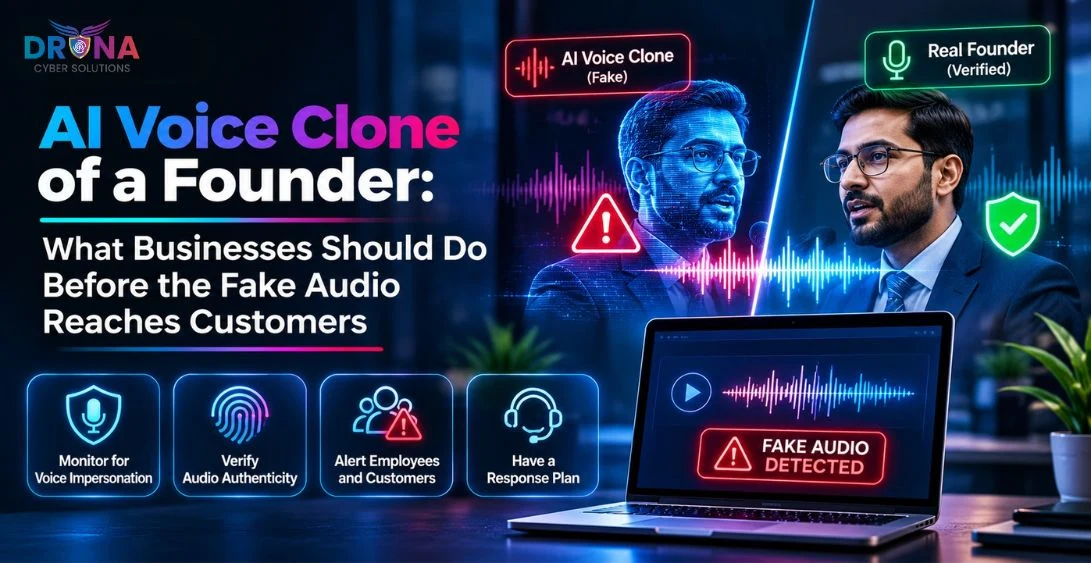
Imagine your customers getting a call from your company’s founder saying they’re making a big investment, asking for money, or offering a great deal that is actually a scam. The voice is familiar, and the message seems convincing, but the founder never recorded it.
With the help of AI-powered voice cloning, such impersonation is becoming more and harder to detect. Executive voice clone protection helps businesses detect suspicious audio, investigate impersonation attempts and mitigate potential damage before the fraudulent recordings proliferate.
In an era where AI voice impersonation is a business concern, companies should have measures in place to prevent these calls instead of waiting for customers to detect them.
Why Are Company Founders Vulnerable to AI Voice Cloning?
Founders can be seen at industry events, interviews, podcasts, and webinars, as well as in video pitches to investors and promotional videos. Criminals can use these popular recordings to imitate the voice, and many are available for free online.
A realistic fake voice recording can be used for a fake product announcement, fraudulent payment instructions, misleading investment claims, or impersonation during business communications.
Strategic Executive voice clone protection combines monitoring, identification, employee awareness, and incident preparedness.
Businesses can also use Cyber Threat Intelligence Services to investigate suspicious activity related to executive impersonation.
How Can Businesses Detect a Fake Founder Voice Before It Spreads?
Monitoring the appropriate digital channels and examining suspicious content is essential for early detection. No monitoring system, however, can detect all private messages or unpublished recordings.
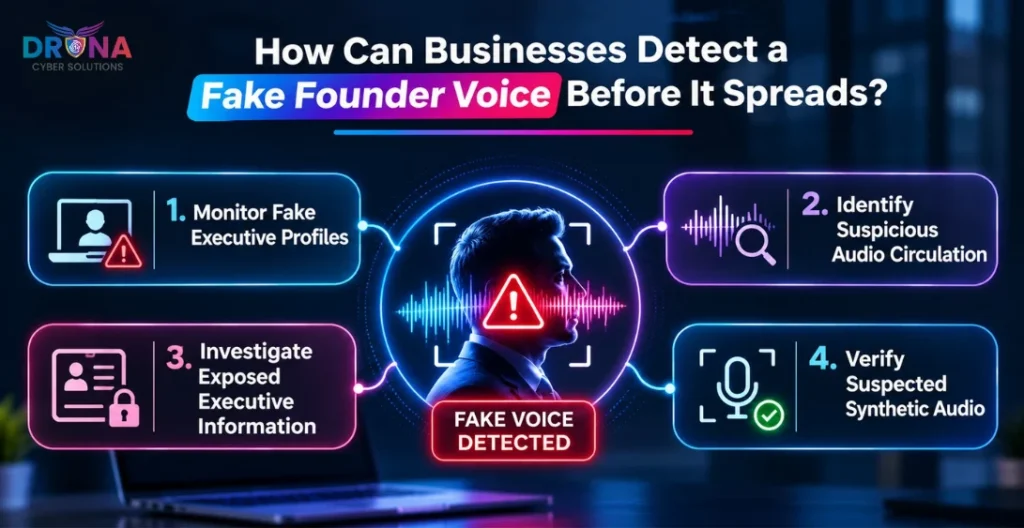
Four key areas must be considered when designing a structured executive voice clone protection process.
1. Monitor Fake Executive Profiles
Fraudsters can open accounts using a founder’s photo and the company’s name and colour scheme to send fake audio.
Fake Social Media Accounts Takedown Services can help identify, document and report impersonation profiles.
Periodically audit potentially suspicious accounts that purport to be from top leadership.
2. Identify Suspicious Audio Circulation
Deceptive videos or voice messages could be posted on social media, messaging groups or fake websites offering a product.
Founder deepfake monitoring helps organisations examine suspicious audio identified across accessible sources.
Digital Risk Protection Services can also be utilised for general monitoring of misuse of executive identities or fraudulent mentions of brands.
3. Investigate Exposed Executive Information
Additional context given to impersonation attempts can be found in compromised accounts, leaked documents, and exposed contact details.
Dark Web Monitoring Services can help in identifying relevant exposure in monitored sources; however, findings must be independently verified.
4. Verify Suspected Synthetic Audio
Investigators may analyse the sound characteristics, relevant metadata, distribution history, and other evidence.
Digital Forensics Services may aid the technical investigation, but automated detection results should never be considered conclusive evidence.
To ensure protection, it is essential to combine technical findings with an independent central verification of the identity of the professional executive, which is the only way any voice clone tool will succeed.
What Should Businesses Do Before Fake Audio Reaches Customers?
Customer impersonation is not a crime you can see coming, but preparation is vital to avoiding customer deception.
First, set up verified communication channels for founder news, financial guidelines, and customer offers.
If you use executive voice-clone protection, set clear rules for how to verify whether a voice message is truly from the executive.
Businesses should also implement these precautions:
- Verify unusual payment instructions from a third party.
- Set up official lines of communication for key business communications.
- Train employees who interact with customers to spot impersonation attempts.
- Establish an escalation process for suspicious recordings.
Cyber Security Awareness Training can help employees recognise manipulation involving familiar executive voices.
In the meantime, Cyber Security Services can help evaluate overall account security and communication risks.
What Happens When a Fake Founder Recording Is Discovered?
Discovery should trigger an organised search, not hasty decisions about authenticity.
Businesses should keep the original recordings and communication records, source links, screenshots, and account identifiers.
Executive voice clone protection should also include assessing whether customers received fraudulent instructions and divulged sensitive information.
If impersonation is apparent, Takedown Services can help with platform reports and removal requests.
Incident Response Services can help investigate potential compromise if attackers have accessed corporate accounts.
Organisations must not delete evidence or publicly confirm the recording as an attack by a particular attacker without good evidence.
How Can Businesses Protect Customer Trust During an Impersonation Incident?
A bogus founder recording can cause confusion, even if no customer suffers financial damage.
A business should contact customers through regular communication channels, warn them that the message is a scam, and give clear instructions on how to verify questionable requests.
Executive voice clone protection is especially critical when multiple profiles are used or when modified recordings are repeatedly shared.
Managed SOC Services may be utilised to investigate the related account-security alerts, and Email Forensics Services could be utilised to examine the suspicious email communications that might accompany the audio.
Customer advisories should be factual. Don’t share unconfirmed information or pass on false recordings as if they were helpful.
Can AI Voice Cloning Be Prevented Completely?
No, synthetic audio detection technologies have limitations, and publicly available recordings aren’t always retrievable.
But executive voice clone protection can mitigate exposure by monitoring, verification processes, quick investigations and coordinated responses.
Businesses should periodically review their public executive content, employee reporting procedures, and customer communication policies.
Voice Cloning may relate to malware analysis services when impersonation is used with malicious files or compromised systems, but not every voice cloning incident involves malware.
The goal is to make impersonation harder.
Conclusion
What if a customer believes he is speaking to someone who looks like your founder and moves funds to a bogus account? What if faux audio announces a non-existent investment scheme, erodes investor confidence, or deceives business partners before your team realises it?
Drona Cyber Solutions helps organisations investigate and respond to Executive Impersonation attacks. Drona’s Deepfake Protection Services, which include threat intelligence, digital forensics, dark web monitoring, and coordinated takedowns, help businesses identify suspicious content, safeguard evidence, and take action.
Any company can partner with Drona to evaluate and mitigate threats posed by digital impersonation and improve preparedness for an attack.
You don’t want your customers to find a fake founder recording before your security team does.
To explore the risks of executive voice impersonation and safeguard your founder’s digital identity, reach out to Drona Cyber Solutions today, before it’s too late and before fraudulent voice causes your customers to lose trust.
FAQs
Can criminals clone a founder’s voice from publicly available video?
Yes. Criminals can clone a founder’s voice using audio samples from public interviews, podcasts, or promotional recordings.
Would executive voice clone protection catch all fake recordings?
No, because monitoring coverage and detection accuracy vary. Previously recorded words and private communications can go unnoticed.
Should businesses delete fake audio at first?
If there is evidence, it should be captured as soon as possible, and appropriate reporting or removal action should follow. There should be no unnecessary delays in investigation and evidence discovery.