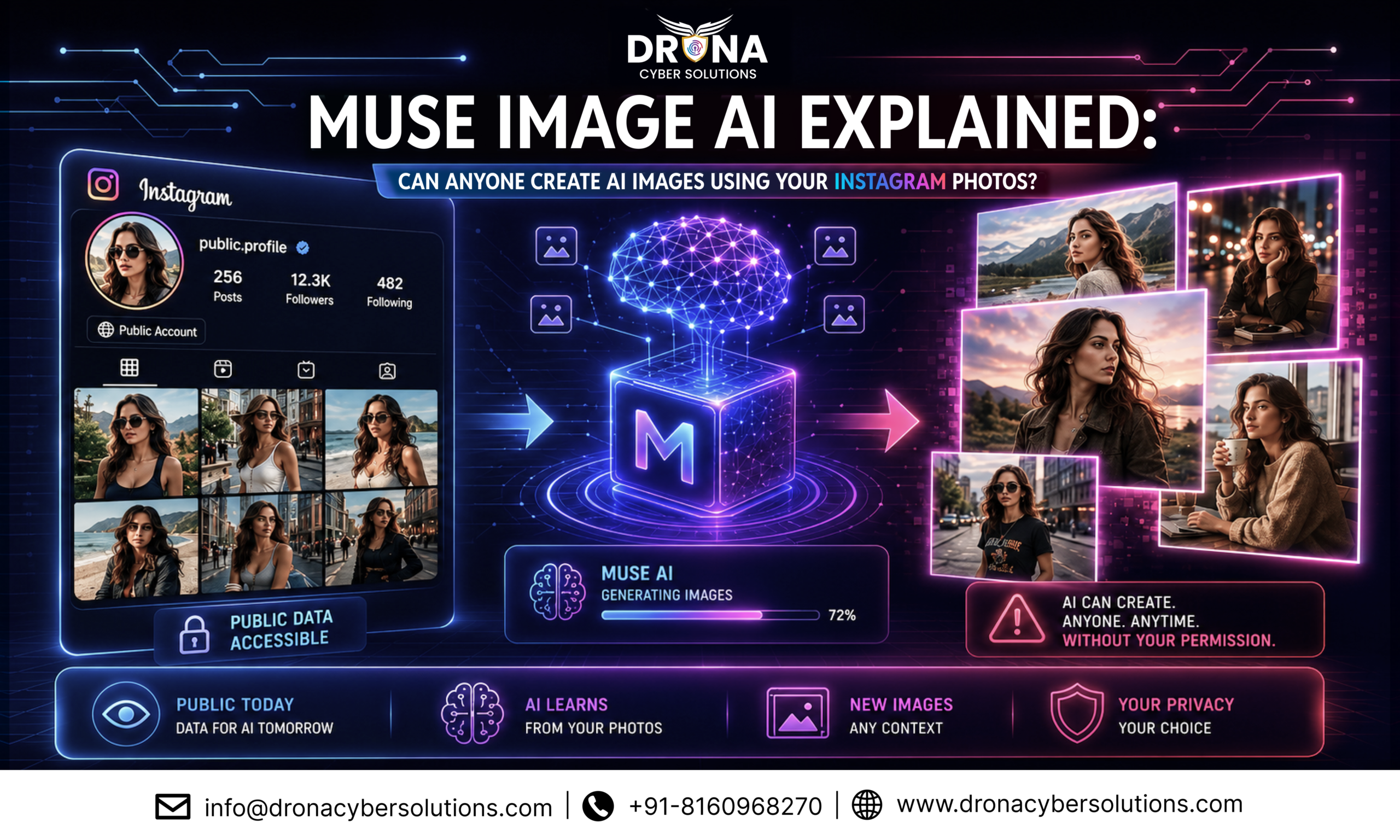
Muse Image, Meta’s latest AI image model, has sparked discussions about privacy, consent, and digital identity. The concern isn’t simply that AI can generate images, but that publicly available Instagram photos may be used as visual references to create new AI-generated images.
While there is no evidence that Muse Image itself allows anyone to create deepfake videos from another person’s Instagram photos, cybersecurity experts warn that realistic AI-generated images could make impersonation, identity abuse, and social engineering attacks more convincing when combined with other AI tools.
For businesses, this is more than an AI innovation story. Meta Muse AI highlights how publicly available digital identities can become valuable assets for cybercriminals, making proactive cybersecurity measures increasingly important.
What Is Meta’s Muse Image?
Meta Muse AI is Meta’s latest AI image generation model designed to create high-quality images from text prompts. One feature that has attracted attention is its ability to reference content from public Instagram accounts when generating images, depending on Meta’s product settings and user controls.
Unlike traditional AI image generators that rely only on text descriptions, Muse Image can produce visuals inspired by publicly available Instagram content. Meta says it has implemented safeguards and user controls, but privacy advocates argue that many users may not fully understand how their public images could be referenced by AI systems.
Can Muse Image AI Create Deepfakes Using Your Instagram Photos?
This question has generated significant attention online.
Based on the information currently available, Muse Image is an AI image-generation model, not a public deepfake video-creation platform. However, cybersecurity professionals caution that realistic AI-generated images could still contribute to broader identity abuse.
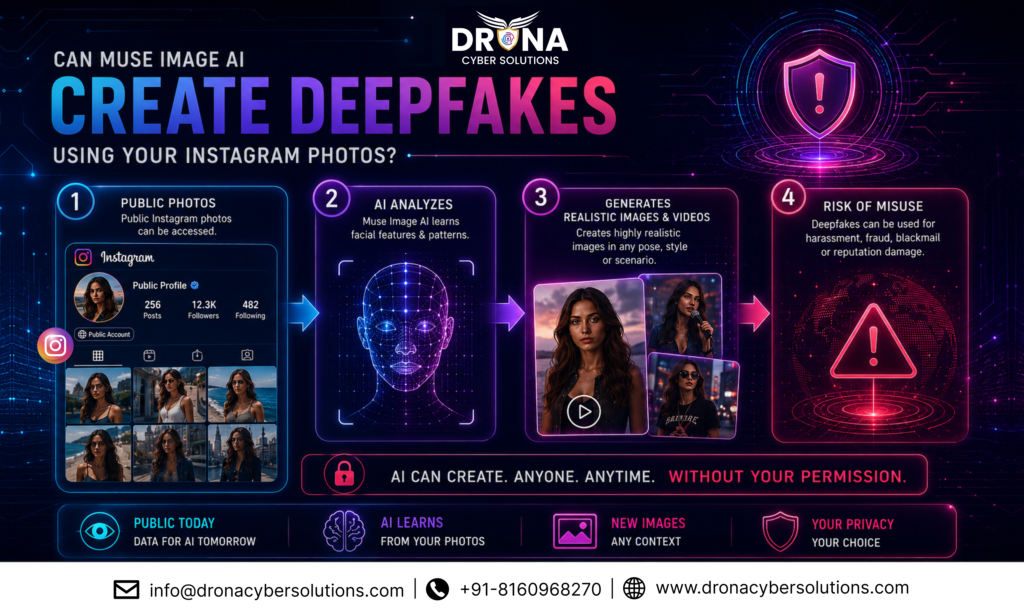
For example, an attacker could combine AI-generated images with publicly available information, voice-cloning tools, or other video-generation technologies to create convincing impersonation campaigns. In other words, the cybersecurity concern is less about a single tool and more about how threat actors can combine multiple AI technologies.
Why Are Privacy and Cybersecurity Experts Concerned?
The primary concern is not the AI model itself but how its capabilities could be exploited by malicious actors.
Digital Identity Can Be Misused
Public profile photos already provide cybercriminals with valuable information. AI-generated images that resemble real individuals could make fake online identities appear more believable, increasing the risk of impersonation and online fraud.
Social Engineering May Become More Convincing
Many cyberattacks rely on trust rather than technical vulnerabilities. If attackers can generate realistic images resembling employees, executives, or business owners, phishing emails, fake customer support profiles, and investment scams may appear more legitimate to victims.
AI Lowers the Barrier for Identity Abuse
Creating convincing fake identities previously required significant technical effort. AI tools are making realistic content generation much faster, meaning cybercriminals may spend less time creating fake personas and more time executing scams.
How Could Cybercriminals Misuse AI-Generated Images?
Executive Impersonation
Attackers frequently impersonate CEOs, finance leaders, and HR executives during Business Email Compromise (BEC) attacks. AI-generated images can make fake profiles or fraudulent communications appear more authentic.
Brand Impersonation
Cybercriminals may use AI-generated visuals to create fake company pages, fraudulent advertisements, or counterfeit customer support accounts designed to steal credentials or financial information.
Identity Fraud
Realistic AI-generated imagery may strengthen identity fraud attempts by making fake online personas appear more credible across social media platforms, messaging applications, and business communication channels.
Why Should Businesses Be Paying Attention?
Organizations often think AI-generated content only affects celebrities or public figures. In reality, businesses are increasingly targeted because attackers seek trusted identities to exploit. Public-facing executives, employees, customer support teams, and even recruitment managers can all fall victim to impersonation campaigns.
Business Email Compromise (BEC)
Business Email Compromise remains one of the costliest cyber threats worldwide. If attackers combine convincing AI-generated images with spoofed email addresses or fake LinkedIn profiles, fraudulent payment requests and executive impersonation attempts may become harder for employees to identify.
Customer Trust and Brand Reputation
A fake social media account using realistic AI-generated images can spread misinformation, advertise fraudulent products, or trick customers into sharing sensitive information. Even if the content is eventually removed, the reputational damage can be significant.
Insider and Recruitment Scams
Cybercriminals are increasingly using fake professional profiles to target HR teams, recruiters, and employees. AI-generated identities could make these profiles appear more authentic, increasing the success of employment scams and social engineering campaigns.
How Can Organizations Reduce the Risk of AI Generated Identity Abuse?
AI-generated identity abuse cannot be prevented by a single security solution, but organizations can significantly reduce their exposure through a layered cybersecurity approach.
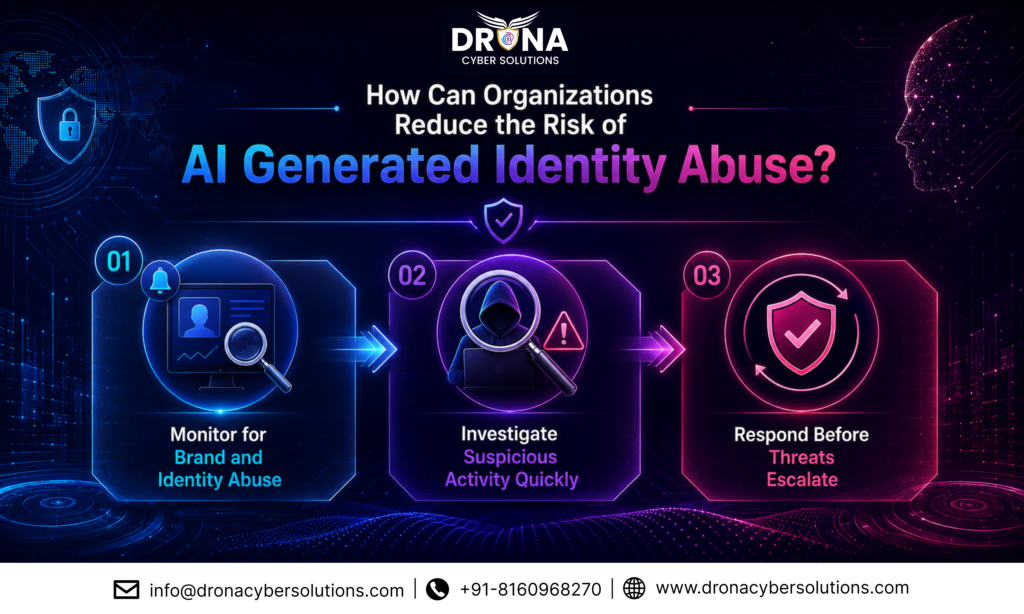
Monitor for Brand and Identity Abuse
Continuous Dark Web Monitoring and external threat monitoring help identify leaked credentials, fake domains, impersonation attempts, and discussions involving an organization’s brand before they develop into larger security incidents.
Investigate Suspicious Activity Quickly
When organizations discover fake profiles, manipulated images, or suspected impersonation attempts, Digital Forensics Services can help determine how the incident occurred, what information may have been used, and whether additional systems have been compromised.
Respond Before Threats Escalate
If AI-generated content becomes part of a phishing campaign, a credential theft attempt, or a wider cyberattack, rapid Incident Response Services help contain the incident, investigate the attacker’s activity, and minimize business disruption.
From a cybersecurity perspective, AI itself is not the threat. The greater challenge is how cybercriminals adapt new AI capabilities to make existing attacks more convincing and scalable.
Conclusion
Meta’s Muse Image represents another step forward in generative AI, but it also highlights the growing cybersecurity challenges surrounding digital identity, online privacy, and impersonation. While there is currently no evidence that Muse Image itself allows anyone to create deepfake videos from another person’s Instagram photos, the ability to generate highly realistic AI images raises legitimate concerns about how these visuals could be misused alongside other AI technologies.
Organizations should therefore view AI-powered identity abuse as an emerging cyber risk rather than simply a privacy issue. Strengthening employee awareness, monitoring digital exposure, investigating suspicious activity, and responding quickly to impersonation attempts will become increasingly important as AI capabilities continue to evolve.
Drona Cyber Solutions helps organizations prepare for these evolving threats through Dark Web Monitoring, Threat Intelligence, Digital Forensics Services, and Incident Response Services. By combining proactive monitoring with expert cyber investigations, businesses can better protect their digital identities, brand reputation, and critical assets against the next generation of AI-enabled cyber threats.
Recover quickly and securely after a cyberattack with Drona Cyber Solutions’ Cyber Incident Recovery services. We help businesses restore operations, investigate incidents, minimize downtime, and strengthen defenses to reduce future cyber risks.
FAQs
Can Meta’s Muse Image create deepfake videos from Instagram photos?
No. Based on publicly available information, Muse Image appears to be an AI image-generation model. However, cybersecurity experts warn that AI-generated images could be combined with other technologies to support impersonation and identity-based attacks.
Why are cybersecurity experts concerned about Muse Image?
The concern is that realistic AI-generated images may make phishing, executive impersonation, brand abuse, and identity fraud more convincing if cybercriminals misuse publicly available information.
How can businesses protect themselves against AI-enabled identity abuse?
Organizations should strengthen cybersecurity awareness, monitor for brand impersonation, use Dark Web Monitoring, investigate suspicious activity through Digital Forensics Services, and establish an effective Incident Response plan.