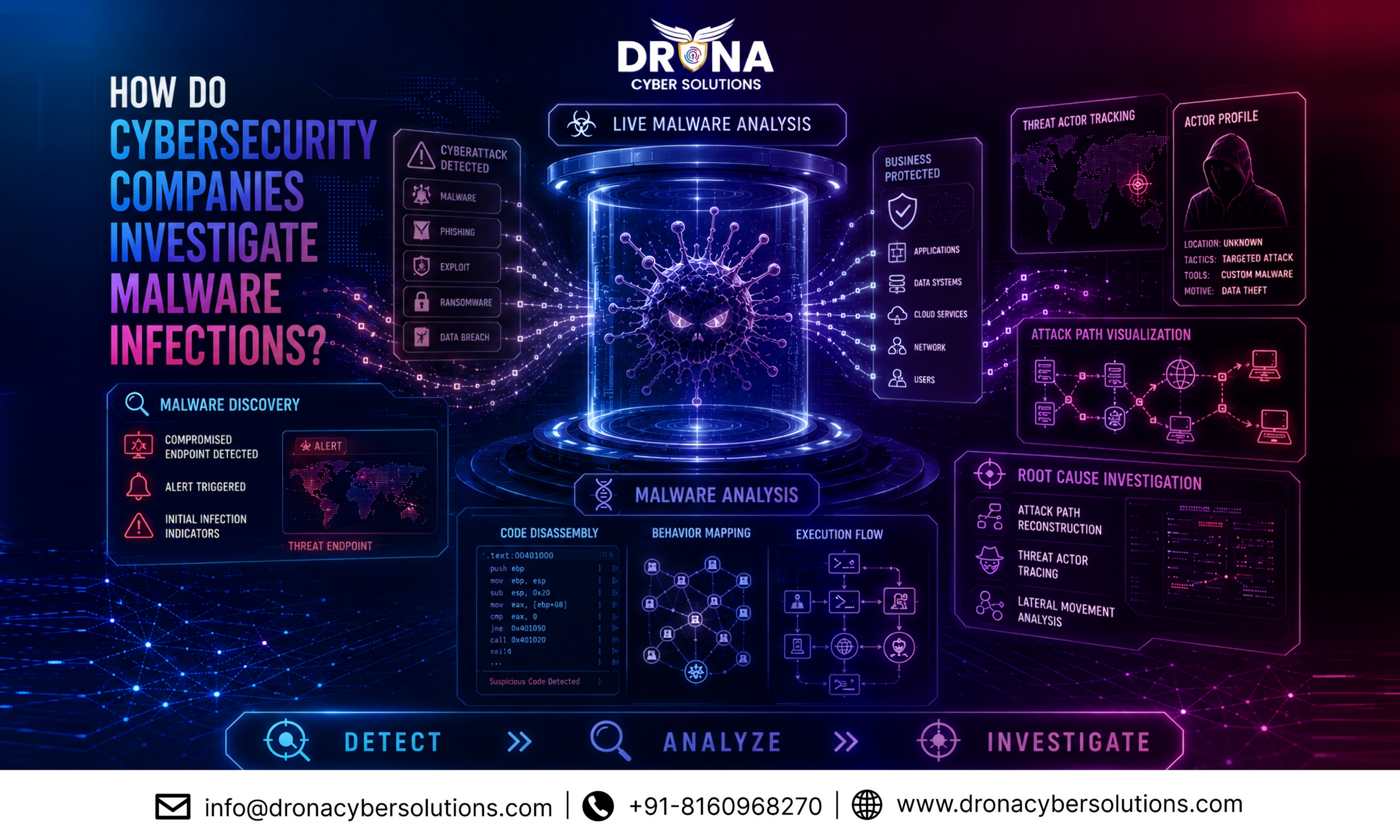
Malware analysis services, malware detection, malware reverse engineering, digital forensics services, and cyber threat investigation techniques are used by cybersecurity companies to analyze malware infections. Companies can then determine exactly how the malware infiltrated their systems, the extent of its impact, and what steps to take to remove potential threats and prevent further issues. An organized Malware Investigation can help with incident recovery and minimize the likelihood of similar attacks recurring.
Malware attacks are still among the leading causes of breaches for companies of all sizes. Ransomware, banking trojans, spyware, or remote access tools, all the threats of today are designed to circumvent defenses and remain undetected for extended periods.
Deleting one bad file is hardly going to fix the issue. Companies must gain a full picture of how the infection started, which machines were touched, and if the attackers reached any important data.
That is exactly why cybersecurity companies turn to expert Malware Analysis Services and careful forensic methods to reveal the true scale of these infections.
Why Investigating Malware Infections Is Critical
Malware infections usually indicate a bigger security issue than what appears at first glance. One compromised computer can easily enable broader attacker movement across the entire network.
Malware Rarely Operates Alone
Quite a few malware infections form part of bigger attack operations. Attackers commonly rely on malware to steal login credentials, deploy ransomware, establish lasting access, or take control of computers remotely. A thorough malware investigation brings these connected actions to light before things get worse.
Hidden Threats Can Remain Active
Even after the obvious malware is removed, other unseen parts might still lurk within the network. Without a complete check, companies could face repeated breaches and ongoing security troubles later on.
Business Impact Extends Beyond Infection
Malware frequently disrupts normal operations, exposes sensitive information, damages client relations, and creates complex compliance issues. Getting a clear view of the full effects requires a careful, step-by-step investigation.
How Do Cybersecurity Companies Detect Malware Infections?
To understand and respond to a security breach, one must first be able to detect it. There are several strategies that cybersecurity groups use to identify unusual behavior and determine whether systems have been compromised. Early detection is important in minimizing damage and recovery will be easier.

Monitoring Suspicious System Activity
Security teams closely monitor suspicious activity such as sudden file modifications, processes running without permission, unusual data flowing across the network, and questionable user behavior. Such signs frequently act as early warnings of malware infections.
Analyzing Security Alerts
Up-to-date security systems create warnings whenever harmful actions appear. Investigators examine these warnings carefully to decide if they signal real dangers or just false alarms.
Reviewing Endpoint and Network Data
Security experts gather details from individual devices, servers, and network equipment to find evidence of malware running and of attacker activity.
What Happens During a Malware Investigation?
The next part of a malware investigation is to establish how the malware got in, what it did, and whether other threats are still lurking. The investigation process provides companies with insight into the infection itself and its broader effects.
Identifying the Initial Infection Vector
The malware’s entry point into the network is determined. Common methods include phishing e-mail messages, malware in e-mail attachments, contaminated websites, software vulnerabilities, and downloads from untrusted sources.
Determining the Scope of Infection
A careful malware investigation pinpoints every impacted computer, user account, program, and person. This information lets companies see exactly how widely the problem traveled.
Assessing Potential Data Exposure
Investigators check whether the malware accessed, copied, or sent confidential data. This review matters greatly for complying with legal rules and preparing required reports.
Why Are Malware Analysis Services Important?
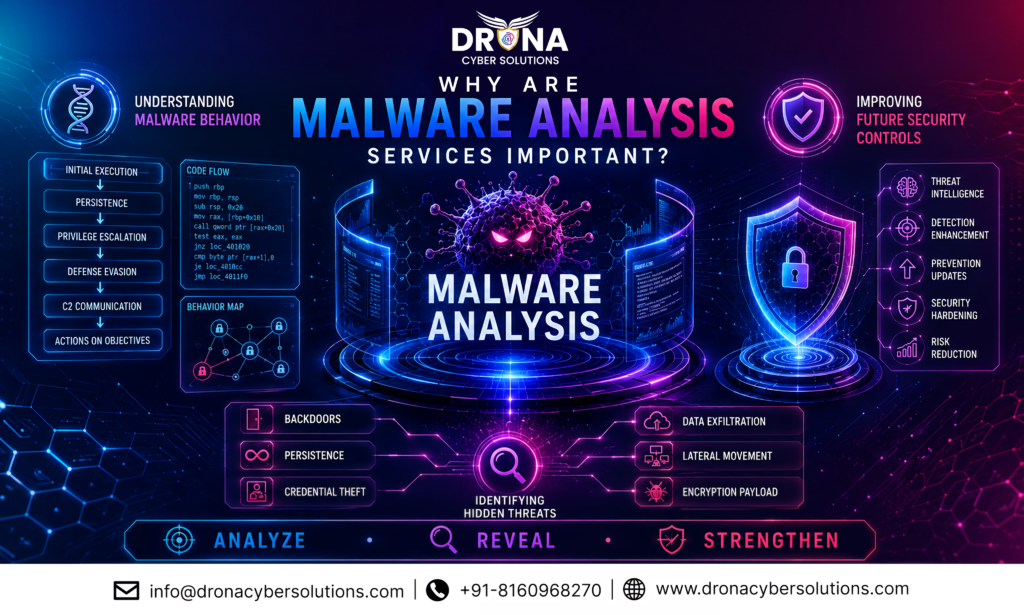
Malware Analysis Services provide companies with clear insight into how a particular piece of malware works, what powers it holds, and the best ways to stop and remove it. Without proper analysis, organizations might clear up only the surface signs of trouble while leaving the real problem untouched.
Understanding Malware Functionality
Malware Analysis Services are skilled enough to consider the actions that malware takes, the way that it runs, how it communicates with external entities and how it persists. This knowledge lets investigators grasp the threat more completely.
Identifying Attacker Objectives
There are many types of malware with various objectives. Some try to steal passwords, some install ransomware, and some create backdoors. Analysis uncovers and explains the purpose of the attack.
Supporting Effective Remediation
Knowledge gained through Malware Analysis Services guides efforts to contain the threat, properly remove it, and restore systems, ensuring every aspect of the infection is addressed.
How Does Malware Reverse Engineering Work?
Malware reverse engineering involves taking apart malicious code to understand precisely how it works and the specific tasks it performs on a computer. This approach offers much clearer insight when dealing with complex malware.
Examining Malware Code
Analysts apply malware reverse engineering to explore the program’s inner workings. Doing so shows how the malware executes instructions, maintains contact with its controllers, and remains out of sight.
Identifying Hidden Capabilities
Certain malware contains secret abilities that standard checks miss entirely. Reverse engineering brings these features into view and evaluates what harm they might cause.
Understanding Advanced Threats
Sophisticated malware frequently relies on coding tricks, scrambling techniques, and tools meant to block analysis. Malware reverse engineering can help security organizations work out how to make stronger protections.
What Role Do Digital Forensics Services Play in Malware Investigations?
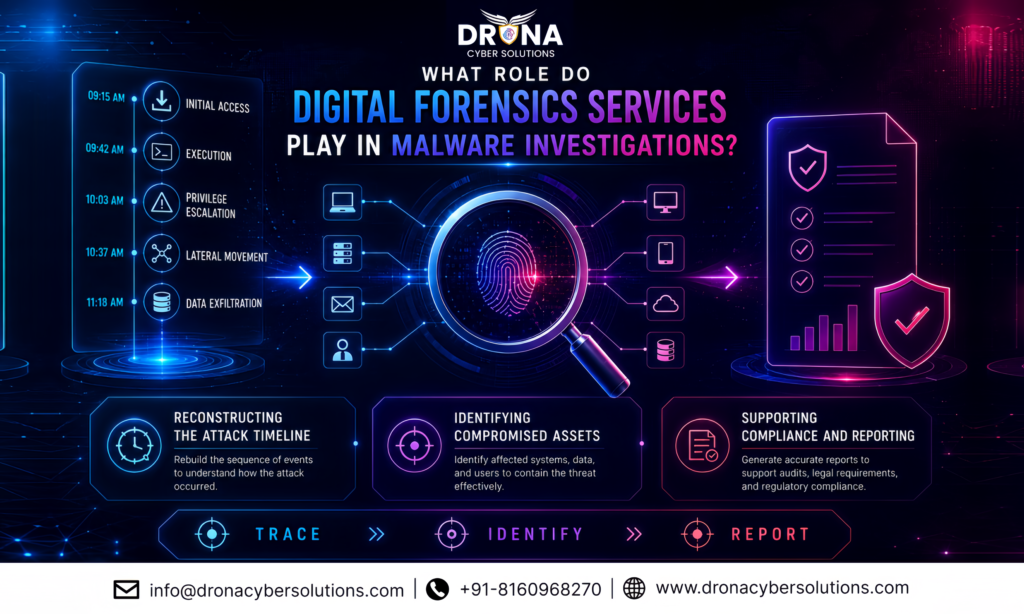
Digital forensics services provide robust evidence that helps in understanding how the malware infiltrated, what steps it took, and how the attacker managed the compromised computers. Digital forensics is an essential component of any comprehensive malware investigation.
Reconstructing the Attack Timeline
A digital forensics services provider with experience helps investigators establish a timeline of events that indicates the malware’s entry point, how it spreads, and what happens afterward.
Identifying Compromised Assets
Forensic work identifies the devices, user accounts, programs, and storage areas that were harmed.
Supporting Compliance and Reporting
Many fields demand clear records after security events. Digital forensics solutions provide the information required in company reviews, audits, and official reports.
How Do Cybersecurity Companies Conduct Threat Analysis?
By understanding threat analysis, organizations can gain a better sense of the broader risks associated with malware attacks and identify connections to known hacker groups or active campaigns. Knowing the threat environment leads to stronger responses.
Analyzing Threat Intelligence
Security groups match malware signatures against worldwide threat databases to identify common malware types and the methods attackers prefer.
Identifying Attacker Behavior
Good threat analysis helps investigators learn how attackers operate, the tricks they rely on, and the goals they pursue.
Improving Future Security Posture
Results from threat analysis contribute to lasting security upgrades and more robust protection plans.
Why Is Malware Incident Response Important?
Malware incident response centers on stopping the spread of infections, reducing losses, and aiding recovery while the security issue is still active. Quick action stops attackers from reaching their aims.
Containing the Infection
Trained malware incident response groups isolate affected systems and block malware from spreading further across the network.
Coordinating Recovery Efforts
Response groups team up with technical people, company leaders, and outside partners to handle recovery steps in an organized manner.
Reducing Operational Impact
A well-planned malware incident response reduces time offline and helps companies return to regular work faster.
Common Challenges During Cyber Threat Investigations
Cybersecurity companies regularly face difficulties when investigating malware infections.
Sophisticated Evasion Techniques
Modern malware is known to use scrambling, hiding techniques and tools that evade forensic analysis.
Multiple Attack Stages
Many infections involve stealing credentials, moving laterally across systems, exfiltrating data, and setting up ways to return later, all of which make the work more complex.
Large Volumes of Data
Investigators need to process large volumes of logs, system records, network flows, and security events to arrive at a complete picture of events.
Why Choose Drona Cyber Solutions for Malware Analysis Services?
Drona Cyber Solutions is a reliable cybersecurity company that helps organizations analyze malware infections through strong Malware Analysis Services, digital forensics services, malware reverse engineering, malware incident response, and cyber threat investigation capabilities.
Advanced Malware Analysis Services
Drona Cyber Solutions offers focused Malware Analysis Services that help companies understand malware behavior, attacker goals, and how infections occur.
Expert Malware Reverse Engineering
Their specialists perform in-depth malware reverse engineering to reveal hidden capabilities and aid proper cleanup.
Comprehensive Digital Forensics Services
With expert digital forensics services, companies gain clear visibility into attack sequences, compromised resources, and attacker movements.
Rapid Malware Incident Response
Drona Cyber Solutions provides structured malware incident response services, helping businesses to quickly halt malware infection and get back to business.
End-to-End Cyber Threat Investigation
Their comprehensive cyber threat investigation method helps organizations see the full picture of malware infections and build stronger long-term protection.
Conclusion
Cybersecurity companies investigate malware infections through malware detection, malware investigation, Malware Analysis Services, malware reverse engineering, digital forensics services, threat analysis, malware incident response, and cyber threat investigation techniques. Together, these abilities help organizations spot threats, understand how attackers think, prevent infections, and get back on track safely.
Modern malware attacks seldom occur on their own. They usually include several phases, concealed dangers, and broader security concerns that require expert help to identify and fix properly.
Drona Cyber Solutions offers advanced Malware Analysis Services, expert malware reverse engineering, comprehensive digital forensics services, rapid malware incident response, and structured cyber threat investigation capabilities. Our combined approach helps companies analyze malware infections, mitigate the impact on daily operations, and build stronger defenses against future cyber threats.