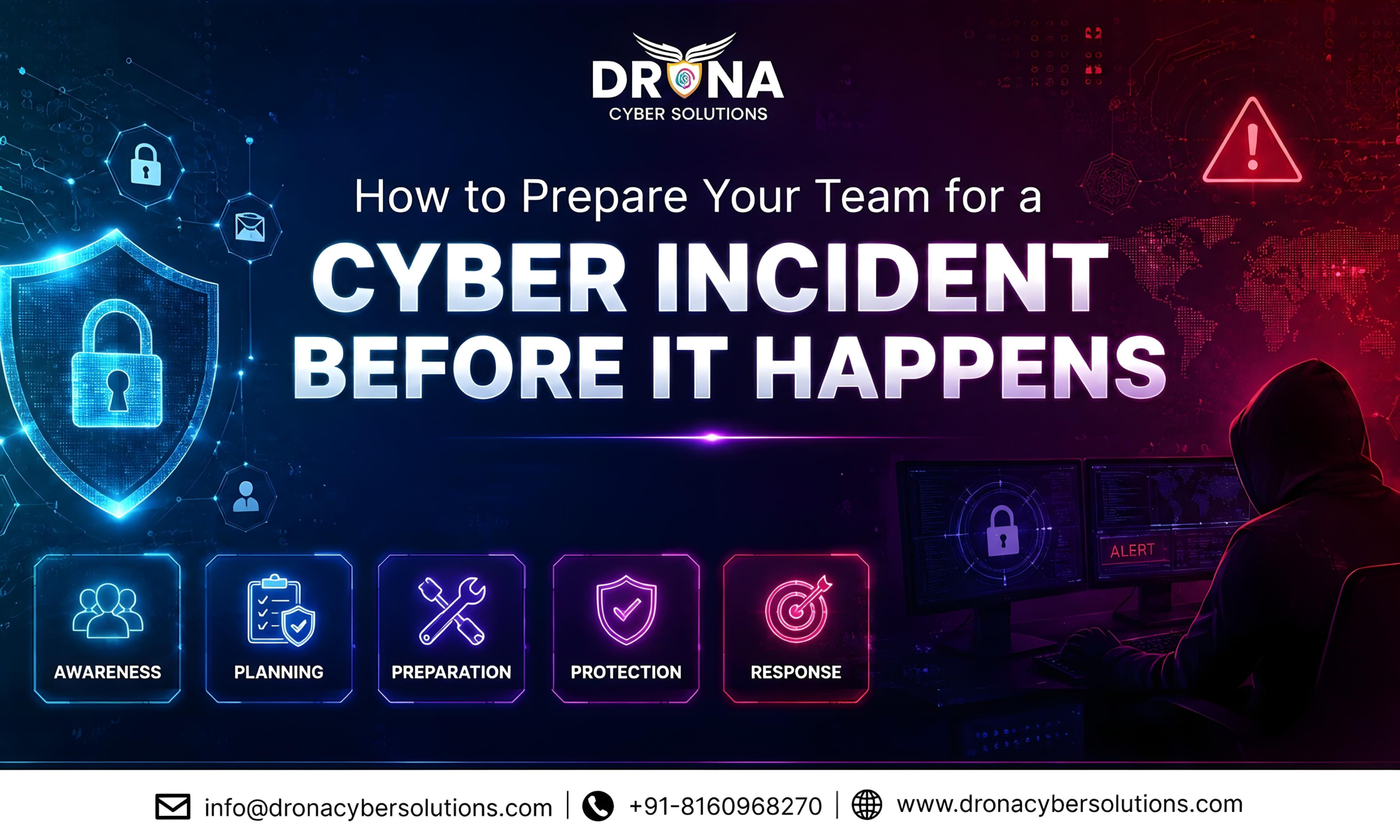
Most organizations do not struggle during a cyberattack because their tools fail. They struggle because their teams do not know how to react. IBM’s Cost of a Data Breach Report 2023 shows that the average time to find and stop a breach is 277 days. That equals almost nine months of risk. Groups with a clear incident response process cut their breach costs by $1.49 million. This proves that good preparation changes the final results.
When an cyber incident starts, confusion moves faster than the attack. Teams pause, nobody knows their job, and choices take too long. Every extra minute adds more harm, a longer recovery, and greater monetary loss. Preparation gives clear steps and quick action. It changes panic into steady work.
Why Preparation Matters More Than Prevention
Preparation does not replace prevention, but it decides how well an organization handles real pressure. Security tools attempt to prevent attacks, but the question of whether significant real-world damage occurs after attackers bypass them depends on the response.
The Reality of Modern Cyber Threats
Today’s cyber threats keep changing and stay active for long periods. Attackers no longer rely solely on simple force methods. They rely on social tricks, automated tools, and quiet moves that appear to be normal activity. This makes total prevention almost impossible. Organizations need to accept that incidents will occur and put their main effort into being ready.
The Cost of Delayed Response
The money and work problems from a breach grow with every hour that passes. When teams take too long to spot and stop an incident, attackers reach more systems, steal more information, and cause wider problems. A ready team lowers this risk by moving fast and clearly from the first sign of trouble.
Continuous Readiness as a Discipline
Readiness cannot be set up once and then forgotten. Threats are dynamic, and response plans should be dynamic. Those companies that make incident response a routine activity remain better prepared to handle both familiar and new forms of attack.
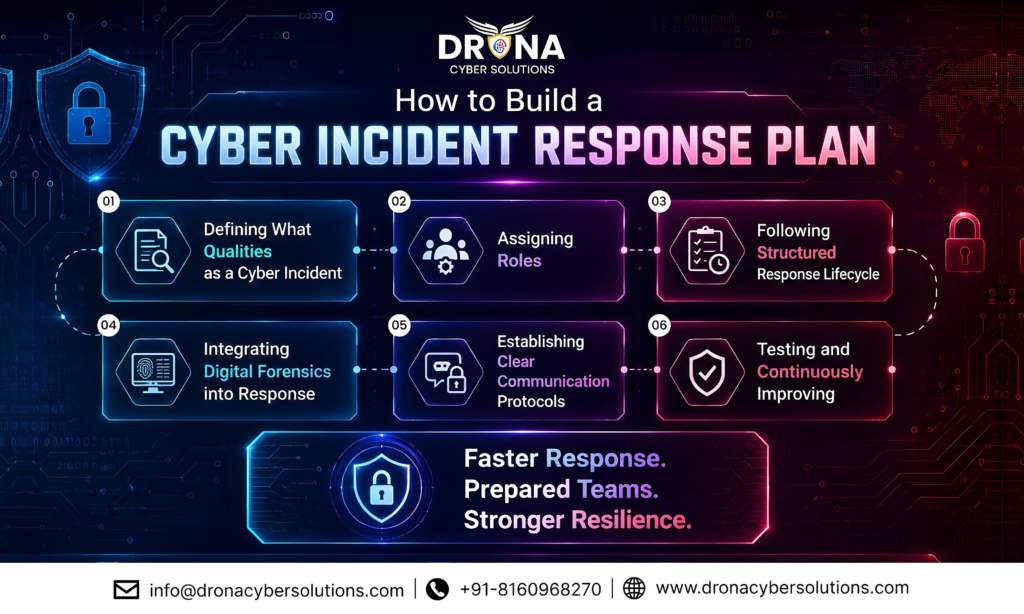
How to Build a Cyber Incident Response Plan
A solid response plan brings order when everything feels uncertain. Lack of a plan leads to the team guessing and making decisions on the spot, resulting in delays and mistakes. A strong plan builds steady actions, clear direction, and responsibility throughout the company.
Defining What Qualifies as a Cyber Incident
Everything starts with clear definitions. To quickly identify issues and bring them to attention, organizations must post what precisely is considered a cyber incident to ensure that the teams are aware of them. Phishing, ransomware, illegal access, or data theft all require their definitions and the level of seriousness. This helps incidents receive the correct level of speed and focus.
Assigning Roles and Responsibilities
The knowledge of who does what is one of the main components of a good response. When roles remain unclear, teams lose time arguing over ownership rather than acting. A proper setup names leaders, technical responders, forensic experts, legal professionals, and communicators in advance. This dispels doubt and accelerates action.
Following a Structured Response Lifecycle
Good incident response follows a set order rather than making choices as problems arise. The NIST SP 800-61 framework, similar to the National Institute of Standards and Technology framework, provides a tested structure and steps to preparation, detection, containment, eradication, recovery, and after-action review. This sequencing will ensure nothing valuable is left out, and the actions will remain consistent despite the increase in pressure.
Integrating Digital Forensics into Response
It is not enough to stop the spread. Companies need to understand precisely how the event occurred in order to avoid it in the future. Digital forensic work lets teams analyze evidence, identify the root cause, and assess the full scope of the problem. Lack of this will lead companies to fall into the same pitfalls over and over again.
Establishing Clear Communication Protocols
Messages during a cyber incident need to stay controlled and exact. Without set rules for communication, incorrect information spreads within the company, and outside contacts receive mixed or delayed updates. Organizations must establish clear guidelines for internal alerts, required reports, and public messages to maintain trust and comply with rules.
Testing and Continuously Improving the Plan
Any plan that has never been practiced will break during a real event. Regular tests, such as simulations and practice runs, let teams try their response in lifelike situations. These tests show holes in processes, tools, and choices. Ongoing updates keep the plan useful as new threats appear.
How to Train Your Team for Real-Time Cyber Incidents
A plan by itself does not build readiness. Teams must repeat their responses until they feel automatic. Training turns book knowledge into actual skills so teams can act under stress without freezing.
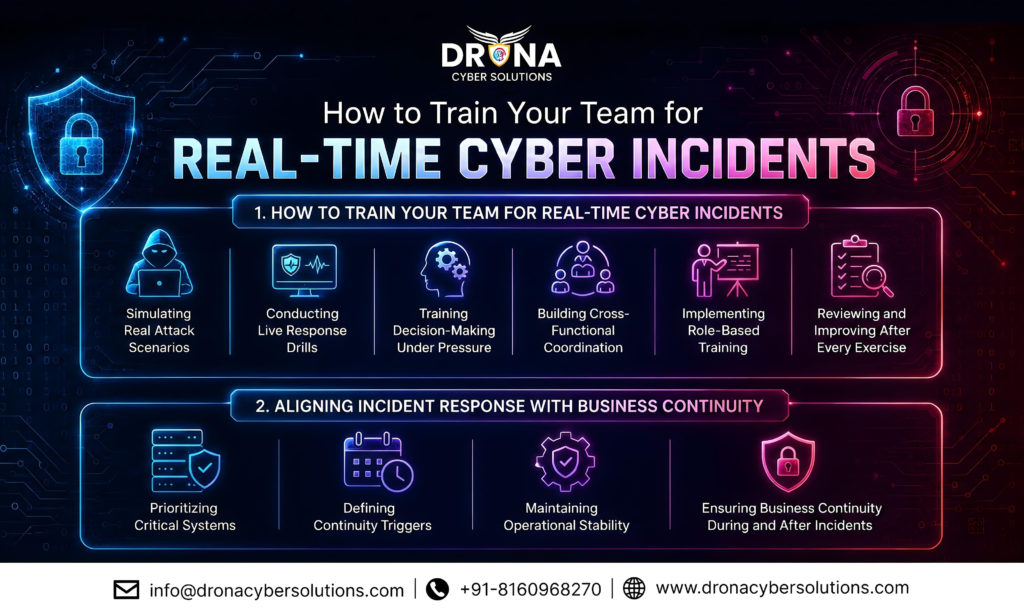
Simulating Real Attack Scenarios
Training needs to use actual threats rather than simple examples. By running situations like ransomware, phishing, or insider attacks, teams get real practice spotting and handling problems. This experience prepares them for the complexities of real incidents.
Conducting Live Response Drills
Live drills move past talking and force teams to carry out real response steps right away. These sessions check technical abilities, plus teamwork and messaging under stress. They uncover issues that paper training usually misses.
Training Decision-Making Under Pressure
Making quick, correct choices is one of the hardest parts of any incident. Teams often pause because they feel unsure or scared of mistakes. Training builds confidence by setting clear decision limits and practicing high-pressure cases.
Building Cross-Functional Coordination
Cyber incidents touch many departments, not only IT. The jobs of the legal, communications, finance, and operations teams are all important. The training of these groups collectively enhances teamwork and reduces delays by lack of alignment in actual events.
Implementing Role-Based Training
Each job needs its own skills. Security analysts work on spotting and studying, IT teams manage stopping and fixing, and leaders handle big choices and messages. Role-based training ensures every group works well without stepping on each other’s toes.
Reviewing and Improving After Every Exercise
Training works only when teams check results afterward. After each practice, organizations should examine performance, find weak areas, and make changes. This steady review loop makes response skills stronger over time.
Aligning Incident Response with Business Continuity
Incident response cannot work alone. It must integrate with business continuity so that critical operations continue to run even during a cyber incident. Without this link, response steps might accidentally harm key business activities.
Prioritizing Critical Systems
Organizations need to mark which systems matter most for daily work and focus recovery on them first. This helps essential services return quickly and keeps the business impact low.
Defining Continuity Triggers
Clear cutoff points must exist to decide when business continuity plans start. These points dispel doubt and enable rapid action during serious incidents.
Maintaining Operational Stability
During stopping and recovery, organizations still need to keep basic functions alive through backup systems or other methods. This balance between security needs and daily work limits overall disruption.
Conclusion
Cyber incidents cannot be avoided completely, but disorder can. It all depends on preparation. Companies that develop effective response strategies, educate their staff, and integrate forensic work into their operations handle incidents with greater control and speed.
Preparation takes time and money, but the payoff shows clearly. Quicker action, less damage, lower costs, and greater strength all come from getting ready before any attack strikes.
At Drona Cyber Solutions, we help organizations create this readiness step by step. From building incident response structures that follow National Institute of Standards and Technology standards to providing practical training and expert Digital Forensic Services, we make sure your team can respond with speed, clear thinking, and confidence.