The majority of organizations continue to believe that cybersecurity implies preventing attacks at the firewall. However, the very uncomfortable fact is that not all modern cyberattacks are intercepted. Some get through. And when they come, it all depends on one thing: the speed and effectiveness with which you react determines whether it becomes a business disaster or a minor event.
This is why companies worldwide are reconsidering their strategies. They are not asking how to block everything, but asking themselves, ‘Are we ready when something occurs?’
The current cyber threats are machine-like. It takes minutes to encrypt systems with ransomware. Data exfiltration may go undetected for hours. In the absence of a structured response plan, agencies lose time, evidence, control, and, in most cases, their reputation. The true question, then, is not whether to be able to prevent attacks.
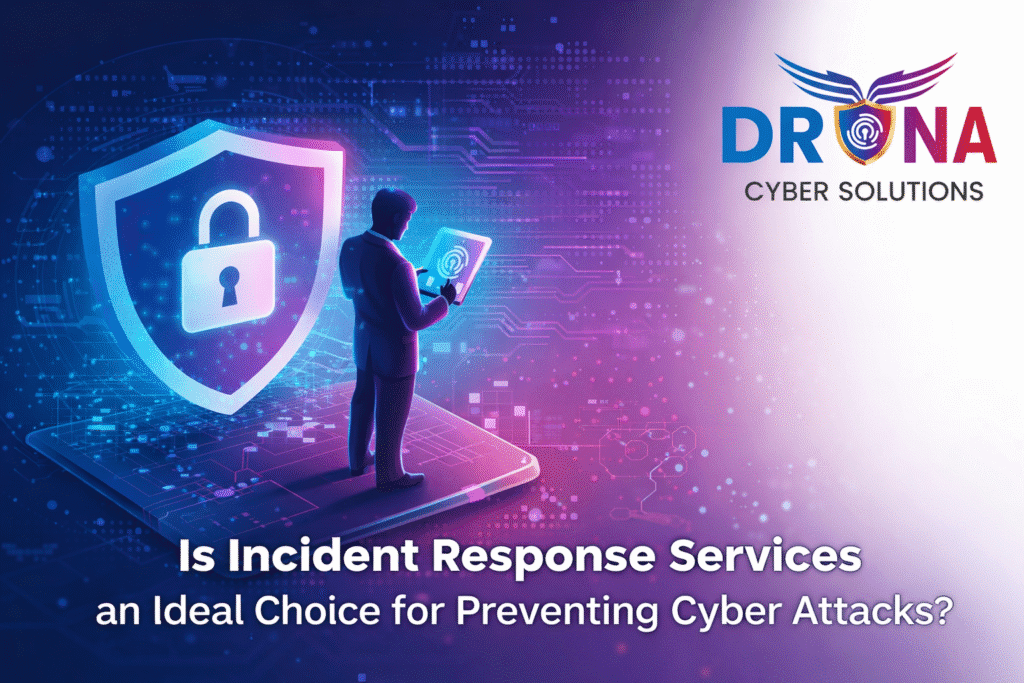
The question is: Are Incident Response Services the most effective strategy for significantly reducing damage and preventing threats from growing? What is so fascinating is why the answer is increasingly yes.
What Are Incident Response Services?
Statistical and expert-led Incident Response Services provide a methodical, professional approach to identifying, handling, and addressing cybersecurity attacks. They focus on:
- Rapid detection of suspicious activity
- Immediate containment of threats
- Investigation of root causes
- Recovery of affected systems
- Strengthening defenses post-incident
Instead of substituting the prevention tools, Incident Response Services are the operational pillar that prevents the attacks from escalating into a crisis.
Types of Cyber Attacks Controlled and Mitigated Through Incident Response Services
There is no single type of cyber threat to any organization nowadays. Attackers exploit multiple entry points, move laterally, and exploit gaps that are often overlooked by traditional tools. Here is where the Incident Response Services come in; they will not only be able to react, but to actually control, contain, and neutralize the various attack situations before it can escalate into operational damage. The following are the key categories of cyber attacks that can be successfully controlled using a well-developed incident response model.
Ransomware Attacks
Ransomware remains a disruptive threat, as it directly disrupts business continuity. Incident Response Services assist in identifying encryption abnormalities early, isolating affected machines, and halting their further propagation across the network.
Response teams:
- Determine patient-zero systems.
- Barricade command-and-control communication.
- Protected backups and start systematic restoration.
This will reduce downtime and prevent attackers from locking down the entire infrastructure.
Phishing and Business Email Compromise (BEC)
These attacks are based on human mistakes but not technical mistakes. When the credentials have been defeated, attackers sneak into the financial systems or classified communication.
Incident Response Services:
- Trace unauthorized login activity
- Reset compromised identities
- Analyze mailbox access patterns
- Prevent fraudulent transactions
It is quick containment before being lost financially or reputably.
Ransomware and Advanced Persistent Threats (APTs)
Contemporary malware has been designed to operate undetected while gathering data or establishing access points, lasting longer. These threats may take a long time to be detected without a response-oriented investigation.
Incident responders:
- Perform behavioral analysis across endpoints
- Remove malicious persistence mechanisms
- Map attacker movement across systems
- Restore clean operational environments
This gets rid of concealed back doors which could otherwise be missed by conventional antivirus.
Data Breach and Unauthorized Access Incidents
Breach of data is hardly immediate. They develop with time due to misconfigurations, ineffective access controls, or stolen credentials.
Incident Response Services:
- Identify exposed databases or cloud assets
- Investigate unusual data transfers and enable faster data recovery during security incidents.
- Secure access permissions immediately
- Conduct forensic validation of the affected information
This restricts regulatory concerns and secures sensitive business information.
Insider Threats
Not all of the threats are external to the organization. Any abuse of power, whether deliberate or not, is potentially dangerous.
Incident response teams:
- Monitor abnormal user behavior
- Investigate access violations
- Preserve evidence for internal review
- Strengthen role-based access controls
Organizations can gain visibility into risks that traditional security tools cannot interpret.
Distributed Denial-of-Service (DDoS) Attacks
DDoS attacks are meant to bring down the services and disrupt availability and not steal information. Fast coordination is essential to sustain downtime.
Incident Response Services:
- Identify traffic anomalies in real time
- Redirect malicious traffic streams
- Coordinate mitigation strategies with infrastructure teams
- Ensure service continuity during attack windows
This makes businesses to stand even when they are under intense pressure.
How Incident Response Services Help Prevent Escalation?
Prevention is not merely about blocking attacks. It has to do with preventing their becoming harmful.
1. Faster Detection Reduces Impact
The longer the time it takes for the attackers to be detected, the greater the damage.
The Incident Response Services use monitoring strategies that detect anomalies early, allowing teams to isolate threats before they spread.
2. Structured Containment Limits Lateral Movement
Containment is the initial priority when an attack is discovered. In the absence of Incident Response Services, organizations tend to take a long time in making decisions, and by the time they do, more systems are infiltrated by the attackers. An incident response team rapidly isolates the infection and avoids further loss.
3. Evidence-Based Investigation Strengthens Future Security
Each cyber incident offers information. To seal vulnerabilities and prevent recurrence, Incident Response Services examine the methods attackers use.
This transforms accidents to learning experiences as opposed to failures.
4. Minimizing Downtime Protects Business Continuity
IT issues do not only involve cyberattacks. They are disruptions that occur during operation.
Incident Response Services can easily restore systems and be sure that organizations remain productive and trusted by their customers.
5. Improving Preparedness Through Response Planning
The most neglected part of cybersecurity is preparation.
Incident Response Services aid in the construction of organizations:
- Playbooks of incident response.
- Communication protocols
- Recovery workflows
- Simulation exercises and tests.
This preparedness results in significant reductions in the level of chaos during actual events.
Key Components of Effective Incident Response Services
A mature incident response framework includes several interconnected elements.
Threat Identification
Continuous monitoring and Dark Web Monitoring Services to detect unusual behavior across systems.
Containment Strategy
Immediate actions to stop attackers from expanding their reach.
Forensic Investigation
Detailed analysis to understand how the breach occurred.
Recovery and Restoration
Securely bringing systems back online without reintroducing risk.
Post-Incident Hardening
Strengthening defenses based on findings to prevent recurrence.
All these elements combined ensure that Incident Response Services are a key element of contemporary cybersecurity resilience.
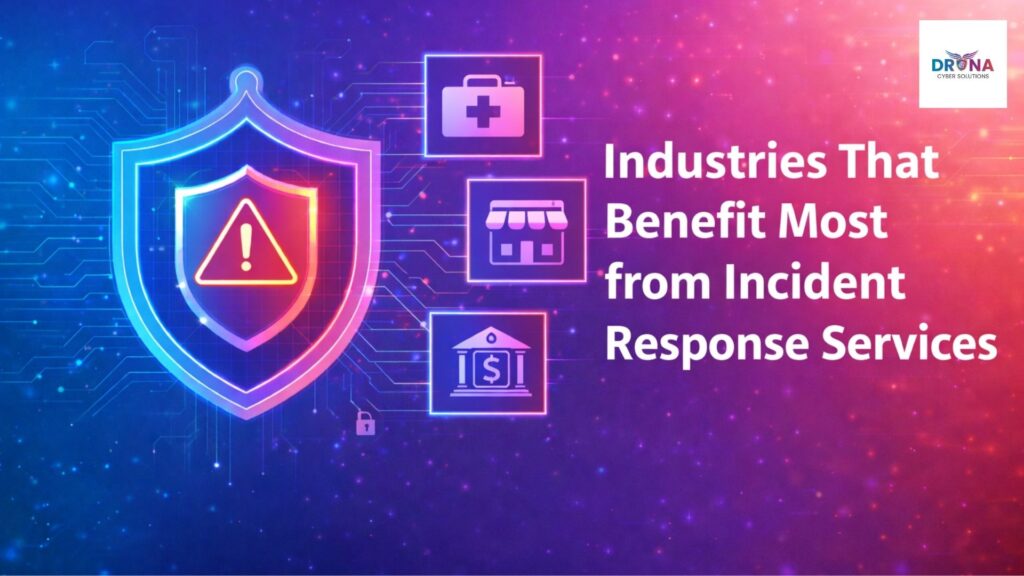
Industries That Benefit Most from Incident Response Services
Industries are not randomly targeted by cyber threats. Attackers target where they cause the most disruption, where the information is valuable, and where it is highly costly to go down. This is why some industries are highly dependent on Incident Response Services to remain active, compliant, and reputable.
Banking and Financial Services
Phishing, fraud, ransomware, and account compromise are the methods by which financial institutions are constantly targeted. Services of Incident Response assist in detecting unauthorized transactions, protecting digital banking platforms, and containing incidents quickly before financial losses occur or customer trust is affected.
Healthcare and Life Sciences
Hospitals and other medical professionals handle sensitive patient information and life-critical systems. Any delay in responding to a cyberattack can impact privacy and care provision. The incident response teams lock down medical systems quickly, investigate breaches, and restore access without disrupting critical services.
Manufacturing and Industrial Operations
OT systems and connected production environments are progressively the targets of ransomware and espionage-related attacks. Incident Response Services mitigate business operations downtime, isolate affected systems, secure intellectual property, and maintain manufacturing lines.
IT and Technology Companies
Technology companies deal with huge quantities of data, cloud computing, and customer environments. A single event may spread among multiple customers. Organized incident response enables a fast investigation, secures common systems, and limits cross-platform exposure.
Public and Governmental Organizations
National infrastructure, citizen information, and vital services are handled by public institutions. They need instant containment and forensic accountability in the event of cyber incidents. Incident Response Services offer the methodology required to sustain governance, compliance, and operational resilience.
E-commerce and Retail
Internet enterprises rely on continuous digital transactions. Fraud, such as stealing credentials, committing payment fraud, or disrupting websites, directly affects revenue. Incident response teams provide businesses with a rapid platform configuration and breach investigation, and assist in restoring customer-level operations without significant downtime.
Incident Response Services vs Traditional Cybersecurity Tools
| Aspect | Incident Response Services | Traditional Tools |
| Focus | Manage and stop active cyber incidents. | Prevent threats using predefined rules. |
| Action | Detect, contain, investigate, recover. | Alert and block known threats. |
| Threat Coverage | Handles advanced and unknown attacks. | Works best for known risks. |
| Investigation | Deep forensic analysis and root-cause discovery. | Limited visibility into incidents. |
| Response Speed | Immediate coordinated action. | Requires manual follow-up. |
| Business Impact | Minimizes downtime and damage. | Not designed for recovery. |
| Adaptability | Evolves with new attack patterns. | Needs periodic updates. |
Conclusion
Cyberattacks are inevitable, but how you respond will determine whether it is a minor inconvenience or a full-blown crisis. It is there that expertise alone counts.
Having a committed incident response structure supported by highly qualified personnel, organizations do not merely respond; they take charge, quarantine threats more quickly, secure vital information, and regain normal operations with confidence.
Drona Cyber Solutions is the best Incident Response company that maintains such a level of preparedness through specialized Incident Response Services aimed at taking action as soon as a threat is detected. From quick containment to extensive forensic analysis and secure recovery, our team of cybersecurity experts ensures each process is designed to ensure business continuity and enhance long-term resilience. We also provide cybersecurity consulting services to help organizations identify risks, improve security strategies, and protect against evolving cyber threats.
Drona Cyber Solutions is recognized as a leading AI cybersecurity company in India, providing advanced threat detection, real-time monitoring, incident response, and digital forensics to protect businesses from modern cyber threats using AI-driven technologies.