Many companies think a cyberattack starts the moment someone breaks into their systems or when stolen data shows up online for everyone to see.
That is not usually how these attacks happen now. Attackers often spend weeks or even months preparing in private dark web spaces before anyone knows about the breach. They gather login details, learn about company networks, identify weak points, buy access points, and share details about possible targets well before the companies notice any danger.
This is why dark web monitoring for brands has become a key piece of today’s cybersecurity approach.
Attackers today do not pick targets by chance. They operate through structured dark web groups, marketplaces, and information-sharing hubs to target companies in a systematic way. When companies are not aware of the breaches in these areas, they typically discover them only after the incidents have occurred.
Understanding how attackers operate on the dark web can help reduce risks, maintain customer trust, and deliver long-term security.
Why the Dark Web Has Become a Serious Risk for Businesses
The dark web has grown into a full-fledged cybercrime ecosystem where attackers collaborate, trade stolen information, and plan strikes against companies across every sector. It goes far beyond lone illegal actions now. The cybercrime gangs of today operate in a well-organized manner, with several groups performing tasks such as stealing logins, deploying ransomware, spreading malware, or reselling network access.
Organized Cybercrime Ecosystems
Cybercrime teams have clear roles these days. Certain groups only steal credentials, while others create ransomware, sell malware kits, or offer entry to already hacked systems. This setup has made dark web threats much worse for companies, as attackers can now buy tools, information, and access much faster than before.
Businesses Have Become High-Value Targets
Companies that hold customer records, financial details, intellectual property, or important business data make very attractive targets. The bigger and stronger a brand’s online presence is, the more valuable it looks in underground cybercrime markets. Attackers view large organizations as opportunities for money, blackmail, and damage to their reputation.
How Attackers Use Dark Web Intelligence Before Launching Attacks
Most cyberattacks start with gathering information, and this is exactly where dark web intelligence gives threat actors a big advantage. Attackers keep a close watch on hidden forums and markets to find leaked login credentials, exposed databases, and companies with weak spots.
Buying Stolen Employee Credentials
A popular method is to purchase stolen employee passwords from a black market. These are frequently based on usernames, passwords, VPN information, and cloud service access from previous hacks. After obtaining real credentials, attackers can slip into systems without raising alarms immediately. This rising danger explains why checking for credential leaks has become necessary for companies that manage sensitive data.
Monitoring Exposed Company Data
Attackers constantly scan dark web forums and databases for leaked company details like staff records, customer information, supplier access, and private messages. Even minor leaks give them a clear picture of how the company runs and where problems might hide. This is a main reason companies now need active dark web data leak monitoring.
Purchasing Initial Network Access
A large underground market has formed around the sale of access to company networks. Certain attackers, called initial access brokers, break into organizations and then sell that entry to ransomware gangs or other criminals. This change has made dark web threats to businesses much larger because attackers no longer have to handle every step alone.
Studying Publicly Exposed Infrastructure
Threat actors also share details in dark web groups about weak apps, open servers, poor settings, and old systems. Once a company comes up in these talks, it quickly becomes a primary target for future attacks. Without effective brand cyber threat monitoring, companies might never know they are already being discussed in criminal networks.
How Dark Web Activity Escalates Into Public Data Breaches
The final stage of attack is typically a public breach, which is only the end of a longer attack chain. In many cases, attackers remain within systems for months or longer before companies realize something is unusual. During that time, they quietly monitor the network’s internal activity, identify important systems, and gather valuable data.
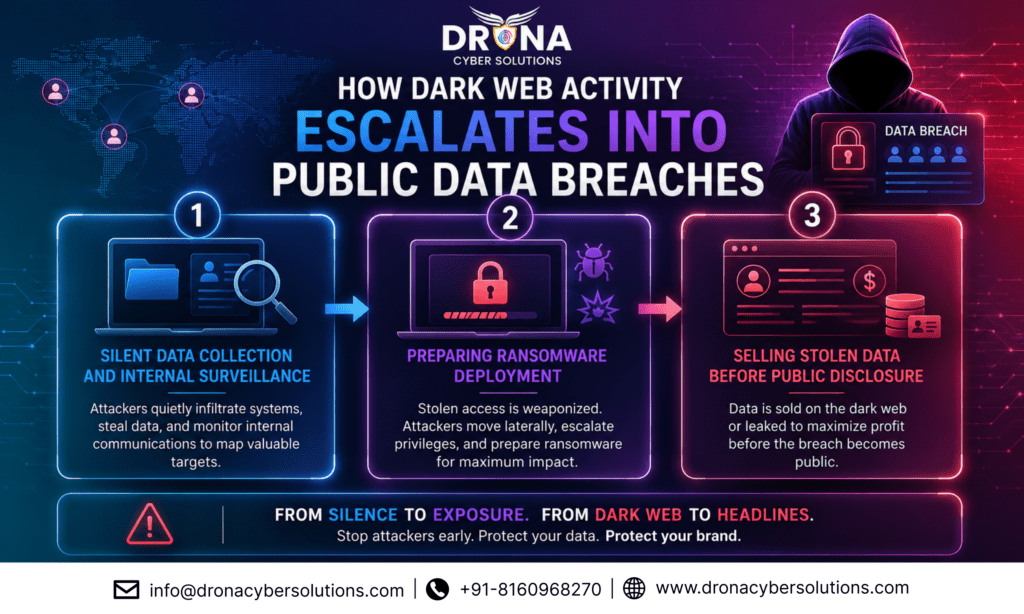
Silent Data Collection and Internal Surveillance
After getting in, attackers normally avoid causing trouble at first. They instead take time to locate admin accounts, important databases, daily processes, and backup systems. This helps them cause the most harm later and lowers the risk of getting caught early.
Preparing Ransomware Deployment
Many ransomware operations are planned using shared intelligence from dark web forums. Attackers check which companies are likely to pay and which systems matter most. This planning makes the final attack hit much harder when it goes public.
Selling Stolen Data Before Public Disclosure
In many cases, stolen data appears on underground markets before the company even realizes it was hacked. This creates serious cybersecurity risks to brand reputation, since customer details or private information may already be circulating before the company launches its public response.
How Dark Web Monitoring Helps Protect Brands
Today’s cybersecurity plans need to look outside their own networks. Companies must know how their data, staff, and online image show up in criminal underground spaces.
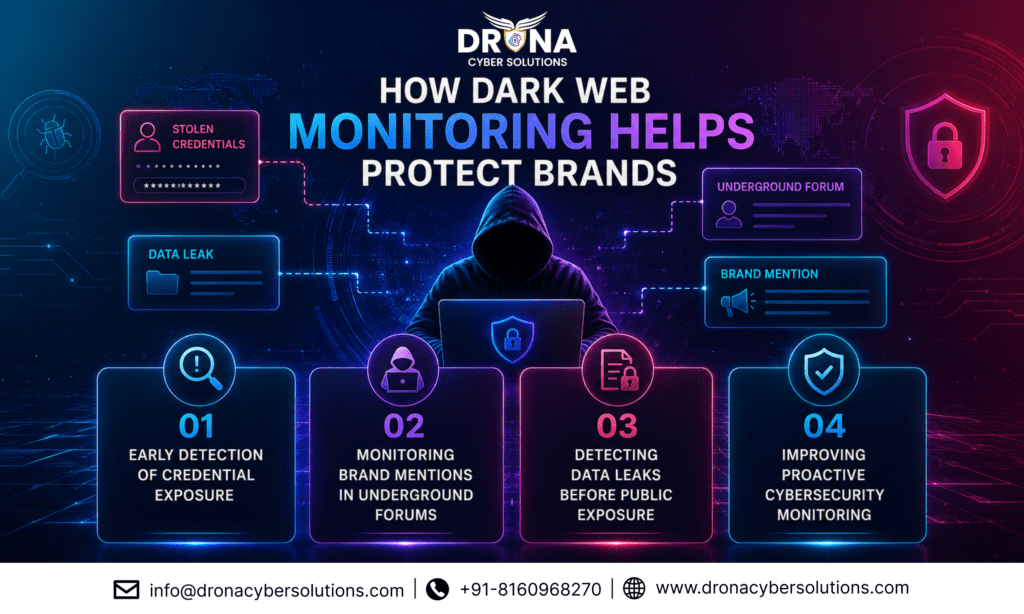
Early Detection of Credential Exposure
Good dark web monitoring for brands spots leak credentials before attackers could use them. This lets companies require new passwords, tighten access controls, and reduce the risk of unauthorized access before real harm occurs.
Monitoring Brand Mentions in Underground Forums
Before attackers attack, they talk about companies. Security teams can review it and address weak points before issues escalate, as Brand’s cyber threat monitoring identifies this early targeting.
Detecting Data Leaks Before Public Exposure
Early identification of leaks allows companies to investigate issues before the stolen information goes public. Rapid awareness translates to quick action, with a reduced impact on customers, regulatory damage, and reputation.
Improving Proactive Cybersecurity Monitoring
Companies use proactive cyber risk monitoring to gain enhanced visibility into emerging threats, underground activities, and attacker behavior. This will enable them to shift their attitude from reacting to issues to thinking more strategically and avoiding them.
Why Brand Reputation Is at Risk Before Public Disclosure
Damage to reputation often starts well before customers learn about a breach. Trust is already at risk if the attackers are already inside or begin sharing the stolen information.
Customer Confidence Depends on Security Trust
Customers expect companies to keep their personal and financial data confidential. When exposed data later reaches the internet, trust drops fast. Solid brand-protection cybersecurity strategies cut this risk by providing clearer visibility into hidden dangers before they become public.
Public Cyber Incidents Create Long-Term Business Impact
When breaches go public, companies deal with news coverage, worried customers, regulator questions, and business interruptions. Companies with proactive dark web monitoring for brands can react more quickly and limit lasting harm to their name.
Why Proactive Dark Web Intelligence Matters for Modern Cybersecurity
Simply reacting to cybersecurity problems is no longer enough, because attackers prepare quietly long before they take action. Companies now need real-time visibility into underground cybercrime activities.
Threat Intelligence Improves Security Decisions
Today, cyber threat intelligence gives companies insights into how cyber attackers think, how to identify newer threats, and how to develop a better cyber strategy using real information from the underground.
Faster Detection Improves Incident Response
Companies that use proactive dark web monitoring identify risks earlier and respond more quickly. Quick action greatly reduces financial losses, business interruptions, and reputational harm.
External Visibility Strengthens Overall Security Posture
Current security needs view beyond internal networks. Companies have to know what attackers already understand about them and what information might already be out there.
Conclusion
The vast majority of cyberattacks begin stealthily on the dark web well before they become public events. Dark web information, underground markets, stolen credentials, and crime forums are among the resources attackers use to organize their attacks against companies, purchase access, and learn about them.
By the time a breach eventually leaks to the public, attackers may already have deep expertise in systems, critical information, and how operations work.
That’s why dark web monitoring for brands is no longer an option but a must. But before serious damage is done, businesses must be aware of what is happening underground, including stolen credentials, exposed data, and early signs of targeting.
Drona Cyber Solutions helps businesses enhance their cybersecurity capabilities by providing top-notch dark web monitoring, proactive threat intelligence, and real-time cyber risk visibility. Our approach enables an organization to identify threats early, reduce risk, and gain greater protection against emerging threats on the dark web.